
Maliqi: The main pressure from the West to reach an agreement in the dialogue after the elections in Serbia
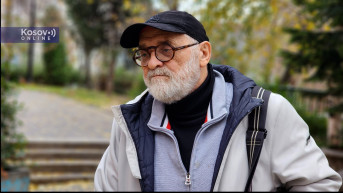
Political analyst from Pristina, Shkelzen Maliqi, assessed for Kosovo Online that there would be increased pressure to make progress on the normalization of relations and reach an agreement between Belgrade and Pristina before the elections in the EU and the US next year. According to him, the main pressure will come after the elections in Serbia, and if the agreed-upon measures are not implemented soon, the two sides will face consequences.
Maliqi emphasizes that Serbian President Aleksandar Vucic and Kosovo Prime Minister Albin Kurti have procrastinated the process until now.
"Now, we are just waiting for the elections in Serbia, and probably after that, there will be the main pressure. I don't know if the election results in Serbia can change something; after the elections, it usually takes two to three months for the government to form. I think diplomats, as far as I can see, are optimistic, saying that everything is done and that it just needs to be implemented," Maliqi points out.
Regarding the pressures from the EU and the US to accelerate the normalization process in the coming months, Maliqi emphasizes that "combined methods" will probably be applied.
"I wouldn't speculate, but there will probably be more intense pressure because, for the first time, we have seen that European leaders are very determined, demanding the implementation of agreements and the completion of the job as soon as possible," he said.
Maliqi is convinced that if they do not fulfill their obligations, there will be consequences for both Belgrade and Pristina.
"It depends on the type of blockade. Sanctions can be imposed. Even Kosovo hasn't had its sanctions lifted; that's one thing, and Serbia is yet to face them if Vucic or whoever is in charge fails to finalize that agreement," he emphasizes.
Maliqi claims that regardless of Brussels and Washington's insistence on finding a solution, coerced agreements are not good. Still, the problem lies in the internal political situation in both Serbia and Kosovo concerning the Franco-German plan.
"For example, in Serbia, there is significant opposition to the Franco-German agreement, and agreements in general. Whether something will change there, I don't know, but it can be, let's say, very tense. In Kosovo, it's the same story; Kurti has calmed down a bit and cannot be a significant obstacle. I think the international community, the West, is losing patience, and the region needs to move into a new phase, and for that, an agreement between Serbia and Kosovo is needed," Maliqi concluded.



0 comments