
Zecevic: Brussels and Washington are in a hurry for the Franco-German plan to be implemented
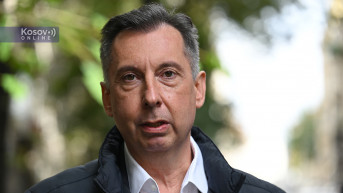
Due to the uncertainty about the outcome of the European Parliament elections in June next year and the US presidential elections in November, Brussels and Washington are in a hurry for progress to be made in the normalization of relations between Belgrade and Pristina and implementing the Franco-German plan, a scientific advisor at the Institute of European Studies, Professor Slobodan Zecevic, says for Kosovo Online.
He expects increased pressure on Serbia to reach some kind of agreement with Pristina, meaning to "agree to some Community of Serb Municipalities that they are preparing, and that plan probably reduces some of the CSM authorities."
"Secondly, in perspective, I expect pressure to somehow recognize the independence of Kosovo, which would allow the five EU countries that do not recognize Kosovo to join the others and affirm Kosovo's independence in international organizations," Zecevic notes.
He emphasizes that there is currently an increased number of KFOR units in Kosovo.
"It is evident that they want to ensure some kind of status quo peace, which may not be bad for the Serbian population, and to provide space for negotiations. What the West wants is a compromise solution, which would probably involve certain rights for the Serbian people in Kosovo and Metohija, but again, on the other hand, probably the strengthening of the authorities in Pristina over that territory. They don't think beyond that. They simply stick to that solution that has remained from the past, which is an independent Kosovo, in the sense that they don't think a step further about what an independent Kosovo will do afterward. It will probably be directed towards Albania and unite with that state. They are not thinking about that at the moment, and they stick to the tried and tested solutions from the 90s," Zecevic says.
He adds that behind the West's efforts to achieve normalization of relations is, in fact, the recognition of Kosovo's independence.
"If we were to recognize the independence of Kosovo, then, according to them, the problem would be solved. Their geostrategic idea of an independent Kosovo would gain full legitimacy, Kosovo would enter the United Nations, and the whole thing would be finished. They would be satisfied, they could say we have achieved our goal. But, I repeat, they do not think about the steps the day after, what the Albanians would do later. That is roughly the reality," he notes.
Regarding the hurry in both the EU and the US to reach certain agreements before next year's elections, Zecevic believes it is because the results of those elections will be uncertain and could change the political map, primarily of European institutions.
"In fact, it is already known that ultra-right parties in Europe will get a lot of votes in the upcoming elections for the European Parliament. It is certain that Marine Le Pen in France will be the first, that the right-wing AfD party in Germany will jump quite a bit, and that it might even be the second party in power. Right-wing parties will probably achieve a good result, which again changes the state of affairs in the European Parliament, and even the election of the European Commission depends on that. From that standpoint, certain changes are expected," he points out.
He continues that, when it comes to America, the results of the presidential elections are also uncertain.
"Joe Biden, his policies, and just his health condition are not the best, and the question is whether he will succeed in winning those elections. And again, there are strong forces against Donald Trump, in the sense that he has a large number of criminal charges, and the question is whether he will end up in prison. So there is uncertainty, and they will try to solve it at least to achieve normalization of relations as soon as possible, i.e., to implement the Franco-German plan," Zecevic concludes.


0 comments