
Marinkovic: Racak was a base of Albanian terrorists; they were killed there, not civilians
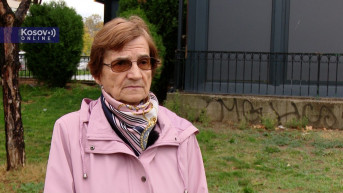
Investigating judge in the Racak case, Danica Marinkovic, stated today that the village of Racak was a “stronghold of Albanian terrorists” and that they, she said, were killed on 15 January 1999 in a clash with security forces—not civilians—emphasizing that there is evidentiary material to support this and that Pristina continues to manipulate the case and rely on falsehoods to this day, TV Most reports.
Speaking to Tanjug, Marinkovic said that at the time she went to the site with members of the investigative team and established and found evidence on the ground indicating that no massacre of innocent Albanian civilians occurred in Racak, as claimed by the then head of the OSCE monitoring mission, William Walker.
“Racak was a major stronghold, and members of a terrorist gang operated there, carrying out terrorist actions. There were killings of Serbian police officers, soldiers, and civilians—Albanians and Serbs alike. On that day, 15 January 1999, the Serbian police planned and organized an anti-terrorist operation aimed at locating and arresting perpetrators of terrorist crimes. The consequences included deaths, and in that anti-terrorist operation—which was planned, legitimate, and lawful—members of the terrorist gang, the KLA as they called themselves, were killed. They were terrorists—Albanian terrorists—who had been operating in that area for a prolonged period,” Marinkovic said.
She stressed that she found evidence to that effect at the scene on 18 January 1999, when she finally managed to enter Racak after three days.
“They prevented me, fired at me, foreigners threatened and blackmailed me. I did not yield to any of that. When I entered the village of Racak, I found a large quantity of weapons. A ton of weapons was inventoried—from automatic rifles and machine guns to crates full of ammunition, hand grenades, and their uniforms bearing KLA insignia. The entire village was dug in with trenches; we inspected those trenches and found a large number of spent rounds and cartridge cases. We also found a machine-gun nest dug into the hillside, a large room where we found military uniforms and blankets,” Marinkovic said.
She added that this indisputably shows that Albanian terrorists were present there and, she said, carried out numerous terrorist acts, including killings of police officers and civilians—Albanians and Serbs.
Marinkovic stated that on 18 January, 40 bodies were also found in the mosque, and that after autopsies conducted by Serbian, Belarusian, and Finnish pathologists, the conclusion was that all deaths resulted from injuries caused by small-arms fire, and that there were no traces whatsoever on any body indicating any kind of massacre.
“This means that Walker put forward an untruth—a shameless lie—a premeditated scenario they needed to serve as a pretext to soon thereafter bomb us and carry out aggression,” she said.
Referring to the fact that, after the evidence was presented, the Hague Tribunal removed the Racak case from the indictment against then officials of the Federal Republic of Yugoslavia and Serbia, Marinkovic emphasized that this was a victory, while Pristina continues to attempt to spread falsehoods about Racak.
“In The Hague, the Racak case was dropped from the indictment, and not a single Serb was charged or convicted for Racak,” Marinkovic said, adding that as a defense witness for Slobodan Milosevic she told the truth and presented facts and evidence.
She noted that there is no stronger proof than when an investigating judge conducts an on-site inspection and collects material evidence in the field, as she did, and said that she presented that evidence in The Hague as well.
Asked how she views the indictment filed late last year by the prosecution in Pristina against 21 individuals, in absentia, for alleged crimes against the civilian population in Racak, Marinkovic said this is nothing new on their part and is yet another manipulation relying on falsehoods.
She emphasized that there is nothing accurate in that indictment.
“I had the opportunity to read part of that indictment. There is not a single letter in it that is true, let alone a fact, an event, or any evidence they have submitted. In that indictment they first claim—incorrectly—that the army shelled the village,” Marinkovic said.
She stressed that it is not true that the army shelled the village, adding that she stayed in Racak for three days and did not see a single damaged, let alone destroyed, house.


0 comments