
Pasic: There may be convictions for Racak, but they cannot stand in the international legal order
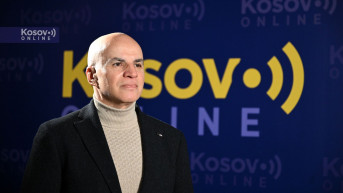
Lawyer and former military prosecutor Dragan Pasic told Kosovo Online that the trial in the Racak case, based on the indictment of the Kosovo Special Prosecution against 21 people for the criminal offense of “war crimes against the civilian population,” will reveal nothing new nor shed light on facts that are not already known. Pasic believes that there is a possibility of convictions, but also that such verdicts cannot stand in the international legal order.
According to Pasic’s assessment, in the case against 21 members of the 243rd Mechanized Brigade of the Pristina Corps of the then Yugoslav Army and members of police units, there will be no new evidence.
“There is a possibility of calling witnesses, but that is not material evidence that would clarify the true factual situation. The events in Racak on January 15, 1999 have caused controversy in the international public as well as in our own. Our side claims, and there is evidence to support this, that it was an anti-terrorist operation in which police and military units took part on one side and fought against terrorists, that is, members of the so-called Kosovo Liberation Army at the time,” our interlocutor emphasizes.
Serbian forensic experts, in cooperation with Belarusian experts, he recalls, established through the so-called paraffin glove test the presence of gunpowder particles on the bodies of the deceased, meaning that these were indeed people who had participated in an armed action.
According to the rules of international humanitarian law, as he points out, it is permitted during an armed conflict to kill persons who offer resistance or who fight against the opposing side.
“Therefore, this was a legitimate military target that was later abused by officials of the international community, above all William Walker, who was the head of the Kosovo mission within the OSCE. No new evidence exists, especially not material evidence, because even the later report of the European Commission, led by the Finnish team and Helena Ranta, did not discover or clarify any new facts. So there will be no new evidence, apart from the existing ones,” Pasic is convinced.
He sees the filing of the indictment as a politically motivated act by the authorities in Pristina.
“They want to preserve in this way their narrative about the history of the so-called Kosovo and about the role of the so-called Kosovo Liberation Army. By filing indictments and conducting trials in the absence of the accused, they want to confirm their position that the so-called Kosovo Liberation Army had a primary role without committing crimes on the territory of Kosovo and that the only culprit for events on the territory of Kosovo is the Serbian side,” he says.
Nevertheless, as he assesses, the possibility of convictions exists.
“I believe, however, that such a verdict cannot stand in the international legal order because it would be based on evidence that is not valid, especially considering that there is not a single valid piece of material evidence, regardless of the statements of prosecution witnesses,” the lawyer says.
Pasic also points out that there is no evidence that procedural rules were respected in this case, because in order to try someone in absentia, it is first necessary to take certain measures, starting with summonses, orders for compulsory appearance, bans on leaving one’s place of residence or apartment. Whether these measures prescribed by Kosovo law were respected, according to him, remains unclear.
Documents and reports by Serbian investigators on the Racak case that Belgrade has in its possession, in the opinion of this lawyer, will not be taken into account by the court in Pristina.
“The reason is that the defense will not have an active role, because the defendants are being tried in absentia, regardless of the fact that each defendant has a court-appointed defense lawyer. Hypothetically, if the defendants were present, the defense would have the right to propose evidence, and I believe the court would then accept the evidence held by the Serbian side – reports, orders, and various other pieces of evidence that would be relevant to this trial. As a result, the aforementioned reports will be absent, which will undermine the right to a fair and just trial,” Pasic points out.
Speaking about the role of William Walker, the former head of the OSCE verification mission in Kosovo, in these proceedings, our interlocutor notes that Walker gave a statement during the investigative phase and that this will be a key piece of evidence for the Kosovo Special Prosecution.
“However, his testimony is not only unreliable, but in many respects inconsistent with the report of the European Commission, which was led by a Finnish team. I would remind that Helena Ranta stated that Walker exerted pressure on her. True, she said this after the report had been completed. There is also an incident she described in which he broke a pencil and threw pieces of it at her. Such a report, even if compiled by an international institution, cannot be valid and can in no way be irrefutable evidence. And if we exclude both that report and the testimony of William Walker, then the rhetorical question arises as to what other relevant evidence could support a future conviction,” Pasic says.

0 comments