
Markovic: If Baerbock attempts to push a more radical resolution, she can expect at least two vetoes
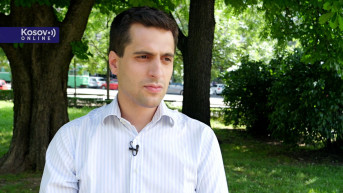
The role of President of the United Nations General Assembly, to which Annalena Baerbock has been elected, is primarily ceremonial, and her appointment is particularly noteworthy given the near-consensus within the international community that she performed poorly as Germany’s Foreign Minister, historian Vukan Markovic told Kosovo Online.
He noted that Germany has faced significant challenges since Baerbock took over the Foreign Ministry under Chancellor Olaf Scholz, culminating in a disastrous electoral defeat earlier this year—an indication, according to Markovic, that German citizens themselves have not been particularly satisfied with her performance.
Markovic emphasized that the President of the UN General Assembly has very limited powers and no authority over major geopolitical developments or the significant decisions taken by the UN as the world’s largest international organization. Baerbock’s responsibilities, he said, will be confined to organizing the agenda and determining the order of proceedings in the General Assembly.
“Any decision of the United Nations that becomes legally binding for member states is adopted by the Security Council. In the past year, we’ve seen several General Assembly resolutions on issues such as Ukraine, Israel, and Gaza, none of which advanced to the Security Council—or were blocked there by the veto of one of the five permanent members. Should Baerbock attempt to push through something more radical in the General Assembly, those resolutions will face the same fate—either blocked in the Security Council or prevented from reaching it if the major powers decline to place them on the agenda,” said Markovic.
He added that while the current structure of the UN is not necessarily ideal—and many would like to see the Security Council expanded to include major countries from the Global South—this is not a matter that will be decided by Annalena Baerbock.
“Which is probably for the better,” Markovic added, “considering her rather undistinguished record as Germany’s Foreign Minister. In the case of any controversial resolution, she can count on at least two vetoes—and judging by recent voting patterns, she may also have to contend with an American veto in the Security Council. So we’re safe, at least, from the consequences of her incompetence.”

0 comments