
Maroevic: The essence of the Albanian Parliament’s declaration on the KLA is pan-Albanian pressure on the court
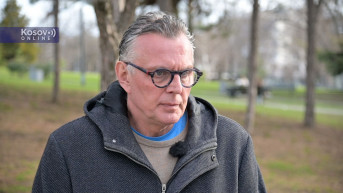
Rade Maroevic, editor of the RTS web portal, says that the essence of the declaration adopted by the Albanian Parliament in support of KLA leaders on trial in The Hague is a pan-Albanian effort to pressure the Specialist Court to issue acquittals for Hashim Thaçi and other former KLA leaders. However, he notes that it is impossible to know whether Tirana’s move will have any influence on the court.
As Maroevic told Kosovo Online, the circumstances under which the Specialist Court reaches its decisions are not publicly known. Unlike the Hague Tribunal, where, as he says, there was a clearer picture of what was happening behind the scenes, in this court that is not the case, nor was it clear how the investigations were conducted.
“In my opinion, this court has done a far more serious job than the Hague Tribunal once did in cases related to the KLA. The cases of Limaj and Haradinaj before the Tribunal were accompanied by numerous controversies, starting with the disappearance of witnesses. Here, we do not see that to the same extent. And when something did happen, people were immediately arrested and detained. Whether the court’s decision will be political rather than genuinely legal, we do not know. But once you are trying politicians, the process is to some degree political. It cannot be isolated from the broader context — what happened in the past, what is happening today, and what is expected to happen in Kosovo in the future,” Maroevic says.
He adds that Albania’s efforts have been joined by individuals from the former U.S. administration and recalls that defense witnesses included former NATO commander Wesley Clark, senior State Department official James Rubin, former UNMIK deputy head Jock Covey, and Christopher Hill, who at the time was U.S. ambassador to Macedonia.
“Politically, they are attempting to shift the proceedings against Thaçi and the others from an evidentiary process into political waters, and that has been clear for a long time. From Wesley Clark’s speech at the end of his testimony, it was clear in which direction this would go — to create a political narrative about the importance of KLA leaders that would not undermine the image of the KLA that has meanwhile been constructed, and secondly, to secure acquittals so as not to damage everything that has been achieved in the meantime,” he assesses.
In his view, even if the verdicts are convicting and it is proven that certain crimes were committed on the territory of Albania, this would not affect Albania’s image.
“If we go back to 1998 and 1999, northern Albania was an area without effective authority. At that time, complete anarchy prevailed in that region. When the war began, the Albanian army fired across the border at the Yugoslav Army. Albania had only emerged from unrest in 1997 and was a very fragile, unstable state with far more internal problems than anyone else in the region. I do not believe that Albania’s current image would be affected if it were proven that torture camps existed or that people were killed — which has been established in some other cases. Some opponents of the KLA, including Albanians, were killed, even in Tirana. I think the main motive behind the resolution adopted by the Albanian Parliament and the demonstrations that preceded it in Tirana is not to ‘wash’ Albania’s image, but to save the KLA leaders,” Maroevic says.
He further notes that Albania is currently led by Edi Rama, a Socialist, and that the Socialist Party has historically been very close to the KLA, dating back to the period when it was led by Fatos Nano and Pandeli Majko.
“There are political and other kinds of ties, and this is a fairly straightforward matter — they want the KLA leaders to be acquitted,” Maroevic concludes.


0 comments