
Mazreku: I would like Kosovo and Serbia to find a solution themselves, not to be part of Europe's problem
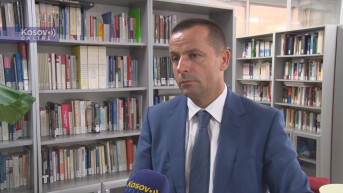
Professor of European Law, Avni Mazreku, assesses that it would be best for both Serbia and Kosovo to find solutions to their problems on their own, rather than their issues becoming Europe's problems, however, as he says, this requires the political will of both Belgrade and Pristina. He is convinced that Serbs and Albanians could reach an agreement without EU mediation.
“Of course, I believe they can. It just requires political will from both sides. If we look at the background of the problem and see the positions Kosovo and Serbia were in before and how far they have come. Naturally, unresolved problems exist, and of course, the dialogue process should continue even after, let’s say, the situation or relationship between Kosovo and Serbia reaches a completely normal level of cooperation. There should always be dialogue. But both countries know, I believe, including President Vucic, that it is in the interest of the Serbian people to actually recognize Kosovo’s independence, because Serbia will benefit greatly from the recognition of Kosovo, especially from transatlantic structures and organizations,” Mazreku said.
According to him, as long as Serbia and five EU countries do not recognize Kosovo, European integration should not be expected for either Kosovo or Serbia.
“The legal framework of the European Union is such that they cannot accept countries that have not recognized all member states. So, who is actually obstructing this process? It is Serbia and Kosovo. Therefore, Serbia and Kosovo could actually be in a position to solve their problem on their own one day. The European Union should be there to mediate and promote the fundamental values of Europe,” Mazreku emphasized.
He assesses that Serbia would have the most interest in joining the EU.
“Serbia is located in the very center of Europe. Take, for example, the recent events in Serbia regarding lithium mines. Serbia could be the main producer of lithium that would actually supply 90 percent of Europe’s market. Think about this interest that Europe has in Serbia and the interest that Serbia should have in Europe,” Mazreku said.
He adds that Serbia’s membership in the EU would resolve the national question of compatriots in the region.
“The enlargement of the European Union is in the interest of the Serbian nation, the Serbian people in general, all those living in the Balkans, including those living in the north, those living in Montenegro, those living in Bosnia, those living in the north, those living in Macedonia, and the people in Serbia. Therefore, the recognition of Kosovo will actually remove the obstacle to the enlargement of the European Union,” he stated.
He emphasizes that the leadership of Serbia is aware of the potential that EU membership opens up but that they have a problem with the opposition, which “plays the nationalist card.”
“Imagine that approximately nine million Serbs live in an organization, a political and economic organization like the European Union, and that they have no obstacles when it comes to the free movement of people, the free movement of capital, the free movement of goods, and so on and so forth. On this basis lies Serbia’s industry. Serbs are the ones who actually benefit the most from this. And I think Vucic and his government are aware of this situation, but he is also aware of the opposition in Serbia, political organizations that play the nationalist card. This is nothing new in the Balkans, but I think both sides, Kosovo and Serbia, know that the future of both nations lies in the EU and other transatlantic organizations,” Mazreku concluded.

0 comments