
Starovic: On the issue of Kosovo’s status, only Serbs and Albanians directly
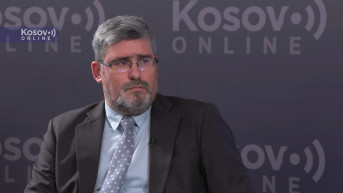
Major foreign actors have an interest in maintaining a certain level of instability here to manage processes on the ground more easily, and what they have always liked least is any attempt at agreement by the Balkan peoples themselves and their joint action, Minister of Labor, Employment, Veteran, and Social Affairs Nemanja Starovic said in an interview for Kontext podcast.
"I won't mention specific countries, and you'll understand why I can't, but as a historian, I always try to view things over a longer historical period and those influences of major foreign factors. If we look at the perspective of the normalization process between Belgrade and Pristina, but also between the Serbian and Albanian people in a broader sense, I think that in this process we can and must strive for normalization precisely in the mandate that the European Union received from the United Nations General Assembly. This means normalization of relations in terms of everyday life and functioning," Starovic emphasized.
In this way, he added, the status issue cannot be discussed, and there will be no agreement.
"But, I also believe, and now I project this for some future, which might be in five, ten, I don't know how many years, I believe that if and when we reach the point where we can discuss the status issue, those discussions will only be possible if they are conducted directly between Serbs and Albanians, that is, between Belgrade and Pristina. Because never with this type of mediation, whether from the European Union or some third foreign factor, will we be able to seriously discuss this issue," Starovic stressed.
Among other things, he also spoke about Albin Kurti's persistent efforts to unilaterally put the Serbian side in a fait accompli situation, in which he is somewhat aided by international mediators.
"We are witnessing a pattern that insults common sense, if I may say so, and you know I constantly point this out. It is a pattern where Kurti resorts to certain unilateral measures to the detriment of the Serbian people in the area of Kosovo and Metohija. We can talk about the militarization of the north, the ban on the trade of goods produced in central Serbia, the ban on the use of the dinar, and so on and so forth. But what happens? Every time, Kurti imposes certain unilateral measures, representatives of the Quint countries condemn the move on a verbal, rhetorical level and issue a few statements. The European Union as a mediator convenes one or more meetings in Brussels, eventually announces that both sides have not shown enough willingness to compromise, and that's where it all ends. The measures continue to be implemented, and then it starts all over again with some new unilateral measures by Albin Kurti. This has been repeating for three years. And no matter how grateful we are to the people from the Quint who verbally and rhetorically condemn Albin Kurti's move, the fact that there is no real reaction in terms of annulling those decisions, in the end, somewhat insults common sense," Starovic concluded.
We will publish the full recording of Minister Starovic's conversation with Kontext editor Milos Garic later today.

0 comments