
Mijacic: The lifting of EU punitive measures is a big issue for Kosovo, but the final decision is not made by Sorensen
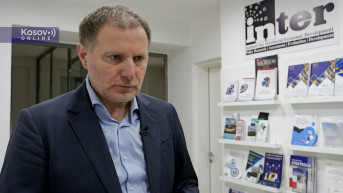
Coordinator of the Working Group of the National Convention on the EU for Chapter 35, Dragisa Mijacic, tells Kosovo Online that the European Union’s Special Representative for the Belgrade-Pristina dialogue, Peter Sorensen, who is currently on a three-day visit to Kosovo, is on a mission during which he will try to understand what the Kosovo side is aiming to achieve in the dialogue, at the start of his engagement.
Mijacic believes that perhaps the biggest surprise is that Sorensen’s visit to Kosovo lasts three days, and he believes this means he will meet with many representatives, not just from the government, the President of Kosovo, and KFOR representatives, but also from civil society.
“Sorensen is visiting the region for the first time and has followed the same approach used by Lajcak, where the first visit is to Pristina, and then to Belgrade. He already met with representatives from Pristina at the Munich Conference, where Serbia's Foreign Minister and Minister for European Integration were present, so he had initial discussions with representatives from both Serbia and Kosovo. However, this is his first visit to Kosovo, where he is on a mission to learn about the different factors, expectations, and what needs to be done within this process,” Mijacic explains.
He further states that it was completely expected and natural for the President and the Prime Minister of Kosovo, who are in a technical mandate, as well as other Kosovo representatives, to express their views regarding the issue of lifting EU punitive measures during their talks with Sorensen, as it is a significant issue for Kosovo.
“On the other hand, Sorensen is not the only address that can resolve this issue. Kosovo is expected to fulfill certain measures in order for the sanctions to be lifted, but this also depends on the EU member states themselves. When the time comes, Sorensen can say whether Kosovo has fulfilled its obligations or not, but the final decision is made by the European Council, which consists of the heads of state and government of the EU member states. It is up to them to decide whether they want to lift the sanctions,” Mijacic adds.
Regarding the closure of Serbian institutions in Kosovo, Sorensen, responding to journalists' questions in Pristina, said that work needs to be done on this issue to ensure that people receive services in the best possible way. Mijacic says that this is certainly one of the most pressing issues.
“It is expected that the issue of providing services to Serbs and others who use services funded by the Government of the Republic of Serbia, and operate in Kosovo and Metohija, will be resolved through the functioning of the Community of Serbian Municipalities. The functioning of the Community of Serbian Municipalities is one of the key issues in the dialogue. Sorensen may have diplomatically answered that work will be done to institutionalize the range of services primarily received by Serbs and other non-Albanians in Kosovo, who are supported by the Government of the Republic of Serbia, in such a way that we don't have violent incursions and unilateral acts to close them. This is certainly one of the major issues Mr. Sorensen will deal with, and we will see whether he will succeed in that,” Mijacic emphasizes.
He adds that it will be interesting to see if Sorensen will stay for three days during his visit to Belgrade, and with whom he will meet, whether it will only be government representatives, or also opposition figures and other actors.
0 comments