
Mijacic: Solving the problem of closed Serbian institutions requires creative solutions from all three parties
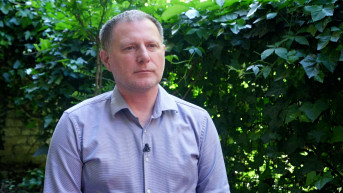
Dragisa Mijacic, Coordinator of the Working Group of the National Convention on the EU for Chapter 35, says that the issue of the functioning of institutions funded by the budget of the Republic of Serbia and operating in the territory of Kosovo is highly complex, and that all three sides – Belgrade, Pristina, and international actors, must approach it constructively and with creative solutions, in order to first and foremost meet the needs of the citizens rather than play “political games.”
“At this moment, there is truly no goodwill from any of the actors, and despite calls for alternative solutions and various modalities, no one currently knows what the fate of these institutions and the services they provide will be,” Mijacic told Kosovo Online.
The recent closures of Serbian institutions in Leposavic and Strpce were condemned by the EU, the OSCE, and the German Embassy in Pristina, stating that the status of these institutions should be resolved through dialogue. The German Embassy also expressed support for the establishment of sustainable alternatives.
Mijacic points out that the international community, including Germany, the European Union, and the United States, has expressed dissatisfaction with the way the Kosovo side is carrying out actions to shut down the institutions, particularly the speed at which it is being done, as it leaves citizens without alternatives to access services they have used for many years.
This topic, he says, is part of the negotiations within the dialogue, but adds that Belgrade lacks tools to force Pristina to implement anything, just as international actors currently lack instruments to make Pristina stop its practice of dismantling institutions.
The issue of the functioning of institutions funded by the Republic of Serbia and operating in Kosovo, he notes, has existed since the establishment of the UNMIK mission in 1999 and continues to be a regular topic in the dialogue.
“Of course, it was expected that with the formation of the Community of Serb Municipalities, some of these institutions would come under its jurisdiction, as envisioned in the Brussels Dialogue. The rest were expected to be shut down, as stipulated in the 2013 Brussels Agreement, which requires Serbia to dismantle institutions funded by its budget operating in Kosovo and Metohija. That didn’t happen earlier, but with the withdrawal of Serbs from institutions in November 2022, conditions were created for the Kosovo government to unilaterally close some or most of them, which has been happening in recent years,” Mijacic says.
He emphasizes that there is a wide range of institutions funded by Serbia’s budget, from central to local authorities and other state institutions. He explains that the CSM was meant to have jurisdiction primarily in the areas of health and education, while the institutions funded by Serbia go far beyond those domains.
“These include issues ranging from local utility companies to matters related to culture, sports, universities, and various aspects of life for Serbian citizens in Kosovo and Metohija who use such services. So, the CSM cannot encompass all the institutions being dismantled. A modality must be found for all of them. On the other hand, the Kosovo government does not want to accept the operation of such institutions even within the CSM, although they are entitled to exist under the Constitution, which is based on the Ahtisaari Plan,” Mijacic points out.
He explains that the Brussels Agreement and Chapter 35, which Serbia committed to, stipulate that Serbia will cease the functioning of its institutions related to local self-governance in Kosovo, and that local governance will be established within Kosovo’s system in return.
“Serbia agreed to that in 2013, but in practice, it never happened. And because it didn’t happen, brutal force was used to shut down those institutions instead of finding a transitional solution. The same thing is happening now with all other institutions, particularly Serbian central government bodies operating in Kosovo, because ultimately, Serbia has not sought modalities for their functioning within the Kosovo system. This was left to be negotiated. When Albin Kurti became Prime Minister, he simply did not want to continue that practice and applied brutal force to dismantle them all. That is the price we are all paying, especially the citizens who use those institutions,” Mijacic says.
As he notes, forming the CSM is, to some extent, an alternative for the institutions that have been shut down and would carry certain responsibilities, but he raises the question of what will happen to other institutions.
“What about, for example, sports clubs operating in Serb communities, or cultural institutions, cultural centers, galleries, and museums? At the moment, no one is working on finding modalities to resolve the issue of those institutions. And that is the tragic part, that the dialogue truly does not produce solutions that are in the citizens’ interest, but instead focuses more on political questions concerning the relationship between Serbia and Kosovo, rather than what actually matters to the people,” Mijacic concludes.

0 comments