
Milic: Pristina's strategy to further pressure the Serbs could lead to a new escalation
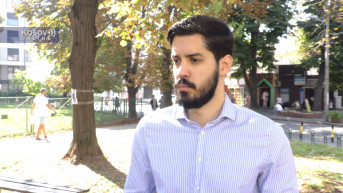
Political analyst Dimitrije Milic today commented on the morning incursion of the Kosovo Police into the Clinical Hospital Center in Kosovska Mitrovica and several private properties in the north. He stated that after the incident in Banjska, Kosovo Prime Minister Albin Kurti continued actions aimed at portraying the Serbs as "militant". He warned that additional pressure from Pristina could provoke a reaction from the local Serbs and lead to a renewed escalation of the situation.
"The situation this morning is directly linked to the Banjska incident because it, in a way, gave confirmation to the Kurti’s Government positions in describing the Serbian community in the north as militant, a community that does not want to participate in the system and wants to be subversive toward the system. In that sense, it has now provided legitimization for such situations," Milic said.
He noted that how far Pristina will go depends on how much Western pressure limits Pristina's actions in terms of violating personal freedoms and rights under the guise of fighting terrorism.
Milic stated that the reaction of the Serbian community to the new actions of the Kosovo Police could be intense, potentially leading to a new escalation.
"When tensions are this high, it can lead to an exaggerated reaction from the local Serbs once again, which reinforces the 'frame' that Albin Kurti wants to impose on the Serbs. The biggest risk is that the escalation that occurred in Banjska and now with Kurti's new reaction could lead to a new escalation through a more decisive response from the Serbian community in northern Kosovo," Milic emphasized.
Regarding the announcement of possible additional pressure on Belgrade by the US and EU to reduce tensions, Milic believes that the pressure should primarily be directed at Kurti’s Government to achieve measurable results.
"Primarily, when it comes to the formation of the Community of Serb-majority Municipalities, it is the root of the current problem because, since it has not been implemented, there has been a reaction from the Serbs, withdrawing from municipalities and prior to that from local institutions. Now you have an open space for escalation because there is no institutional way to articulate your interests. Pressure on Belgrade in this regard would be more aimed at indirectly pressuring the Serbs in the north because it is believed that Serbia has an influence on the Serbian community, primarily on the Serb List," Milic assessed.
He stressed that if there were pressures from the international community, they would be directed at both sides to accept "controversial measures".
When it comes to sanctions, Milic believes that there is unlikely to be a consensus within the EU for the imposition of more serious measures on Serbia.
Referring to reports that some EU member states have requested a reconsideration of sanctions against Serbia, he suggests that these are likely member states that already have skepticism regarding Belgrade's policies.
"One should always look in the direction of some countries in the region, such as the Baltic states, which have hostile relations with Russia, and these are countries that are also skeptical of Serbia. So, these individual sanctions, primarily imposed by the US, have not borne fruit in terms of Serbia changing its policy of distancing itself from these individuals; that has not happened. So, I believe that this form of personal sanctions will probably not be put into effect. But certainly, just the discussion about it is a message to Serbia. The reason for this specific situation, including this morning's events, such as near-warlike actions, is that Kurti wants to impose the perception that the Serbs in the north are a militant organization and that all measures implemented by Pristina are merely counter-terrorism measures," Milic explains.
He adds that the case in Banjska has provided arguments to Western states to tacitly approve of such actions by Pristina.
"Who benefits from the events in Banjska? Currently, Serbia has no benefit from this latest situation," Milic concludes.
He emphasizes that the position of the Serbian community in Kosovo is currently very difficult, regardless of whether there will be measures against Belgrade or not. On one hand, he notes, the Serbs in Kosovo lack institutional representation, while on the other hand, due to how the Serbs were portrayed after the Banjska incident, reduced empathy from the international community can be expected.
"In that situation, it should be relied upon more that the issue of the north will be resolved at a high level, rather than what the Serbs in Kosovo can currently influence. It is very bad when you have no control over your destiny. However, until the issue of the north is resolved at a high level, whether it is related to the presence of Kosovo Forces, municipal presidents, or this latest situation in terms of how Pristina will handle it strategically, because Pristina's strategy may be to exert additional pressure on the Serbs in the north to provoke another similar reaction to this and to somehow round off the image of the Serbian community as militant and criminal, which does not want to participate in the Kosovo system. So, what the Serbs should do is not fall into such traps, no matter how difficult it may be," Milic advises.
He believes that there is a possibility that the international community may impose additional measures on Pristina.
However, in his opinion, this would not lead to an improvement in the situation, as previous measures have not influenced Albin Kurti to change his policy toward the Serbian community.
"It is possible that there will be more punitive measures against Pristina, but Kurti has shown that all these restrictive measures have not influenced him in the sense that he pursues a maximalist policy," Milic stated.



0 comments