
Milic: Spain and Cyprus are unlikely to change their stance on Kosovo
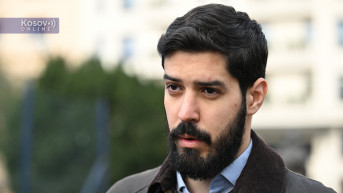
The decision of Spain to recognize Kosovo passports should not be linked to the announcement by British Foreign Secretary David Cameron that Pristina can expect London's assistance in gaining new recognitions of independence, according to political scientist Dimitrije Milic from the New Third Way. According to him, among the five EU countries that do not recognize Kosovo, Spain and Cyprus are the least likely to change that decision.
"The decision to recognize Kosovo passports is more of a question of internal changes in Spain, where the left is currently in power, and they have a softer stance on both Kosovo and the autonomy of different regions in Spain. This is mainly because the current government of Pedro Sanchez depends on a large number of parties that come from these regions, and they want much greater autonomy, and some even full separatism. So, this is a unique position for Spain in the sense that no Spanish prime minister has ever been weaker in relation to the influence of these parties that want greater autonomy. If a right-wing government had been formed in Spain, the decision on Kosovo passports would not have been possible, and probably the opposition to recognizing these documents would have lasted a very long time, even though other EU countries aligned with this decision," Milic notes for Kosovo Online.
He believes that when it comes to states that could recognize Kosovo's independence, they should not be sought among the five EU members who have not done so – Spain, Greece, Slovakia, Cyprus, and Romania.
"We should probably look at states where Britain still has some influence, which are located in the regions of the third world. I assume that states that have recognized and then de-recognized Kosovo will now be under pressure. The question is how authentic and essential this will be for Britain, how much Cameron's message was merely principled and may not lead to concrete steps and diplomatic efforts. Perhaps this should be viewed in the context that Britain today has slightly fewer diplomatic capacities than 10 or 15 years ago, both in terms of resources allocated for it and in terms of general attention compared to all other issues affecting British foreign policy. Including, ultimately, the war in Ukraine, where Britain stood out as one of the most active in supporting Kyiv," our interlocutor points out.
He continues that pressure will continue on the five EU member states that do not recognize Kosovo, but it is difficult to say which of them is the "weakest link."
"It might be easier to say which states are the strongest, which will hardly change their stance, and that is Spain, the largest, politically most powerful, with the most problems regarding regional autonomies that have much greater ambitions than autonomy. Cyprus is unlikely to change its stance due to its problems in the north. Other states that, for example, have skepticism regarding the Hungarian minority, such as Slovakia and Romania, may be somewhat more lenient, as well as Greece. But fundamentally, these are very rigid positions that did not change even when much greater pressure was exerted in 2008 and 2009. It would be more appropriate to look at these states that have much less political power and are located around the world. After all, their recognitions and de-recognitions do not contribute significantly to the outcome, except quantitatively, in terms of the number of states that do not recognize or recognize Kosovo," Milic concludes.



0 comments