
Milivojevic: The coalition of Croatia and Kosovo is the most active in attempts to weaken Serbia's influence
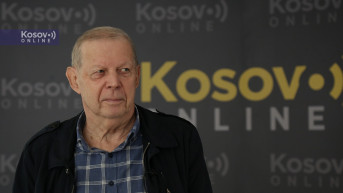
Former diplomat Zoran Milivojevic has stated for Kosovo Online that the collaboration between Zagreb and Pristina has deep roots, adding that it is "a coalition that will be the most active in attempting to undermine Serbia's positions and influence in these areas in any way possible".
Commenting on President Vjosa Osmani's visit to Zagreb and the joint press conference with Croatian President Zoran Milanovic, Milivojevic said he was not surprised by such a stance.
"This is not new, we should immediately mention that this was preceded by the recent meeting of the two Prime Ministers, Plenkovic and Kurti, which confirmed special relations. It should be noted that this also has a historical dimension. Since the time of the civil wars in the former Yugoslavia in the 1990s, cooperation between Croatia and Kosovo has been proclaimed and consolidated in some way," Milivojevic explained.
He emphasized that for Croatia, "the issue of Kosovo and Kosovo's statehood is a strategic interest when it comes to Zagreb's policy towards Serbia".
"Croatia sees this as bringing Serbia to the same level, so to speak, considering that Serbia's position dominates in these areas, and this is something that does not suit Croatian policy in the long run. Croatia tries to compensate for this through direct cooperation with Kosovo, as a key issue for Serbia's position, its international standing, and its state and legal survival. So, it's just a continuation and confirmation of something we have known from before. Moreover, Croatia was among the first to support the thesis of Serbia as a terrorist state after Banjska. We saw that in Granada, Plenkovic was very explicit in his stance that Serbia must bear the consequences. This did not catch on, did not pass because most of the EU still believes that it is more important and valuable to return to dialogue and seek a solution that way, rather than punishing Serbia," Milivojevic said.
According to him, punishing Serbia would divert attention from the dialogue and question the EU's ability to mediate.
"How would the EU mediate with a partner against whom sanctions have been imposed, especially on a political level? It would be an impossible mission, and I think the awareness of this has prevailed among the major players, starting with the Germans. That's why we now have a dynamic effort to return to dialogue, showing that dialogue is still a greater value, even greater than Banjska itself. That's why I think calls for sanctions against Serbia have no chance of success when it comes to mobilizing a broader EU leadership," he said.
He adds that cooperation between Pristina and Zagreb has deep roots and a long-term basis.
"It is certainly a coalition that will be the most active in trying to undermine Serbia's position and influence in these areas in every possible way. So, this is just one episode and confirmation of a concept that has long-term significance, not only deep roots but also in the sense that it will last and be directed against Belgrade in the coming period, regardless of how things develop," Milivojevic concluded.

0 comments