
Why did only Sarrazin among all Western envoys visit Pristina after Banjska?
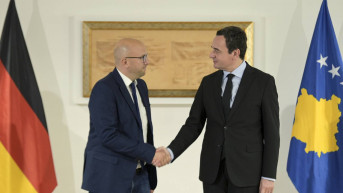
German Envoy for the Western Balkans, Manuel Sarrazin, was the only one among the envoys appointed by the Quint countries for the region who, after the tragic events in Banjska, met with representatives of the Kosovo authorities in Pristina, doing so twice in just a few days. Sarrazin arrived in Kosovo on September 25, the day after the events in Banjska, and on that occasion, he met with President Vjosa Osmani and Prime Minister Albin Kurti. The German "Special Envoy" was in Pristina again on October 1, and after the meeting with Sarrazin, the Kosovo Prime Minister called on the EU to "severely sanction Serbia".
However, it is interesting that in recent days, the loudest calls for punitive measures against Belgrade due to the events in Banjska have come from German political circles. Considering the close ties between Pristina and Berlin, with Berlin being seen as Kosovo's biggest ally within the EU, the nature of Sarrazin's frequent visits naturally raises questions.
That Kosovo and Germany maintain close political relations is no secret, and the German Ambassador in Pristina, Jorn Rohde, even stated that he could not "remember any other country with which Berlin has such strong diplomatic relations as with Kosovo". Kurti's "hard" stance on the crisis in northern Kosovo in recent months and his increasingly nonchalant attitude towards US anger, from where serious warnings are now coming, are often attributed to the protection he receives from Germany.
Besides Germany, other Quint countries also have special envoys for the Balkans: Great Britain - Stuart Peach, France - Rene Troccaz, a former advisor to former Minister of Foreign Affairs Bernard Kouchner, Italy - Francesco Talo, and the USA - Gabriel Escobar.
Diplomat Srecko Djukic believes that Sarrazin's visits are not only in the function of Kosovo-Germany relations but that he was chosen as the most suitable personality on behalf of Brussels, someone who can easily access information of interest to the EU.
"The close ties between Germany and Pristina are well-known, and this has been the case for a long time, not just since the so-called independence of Kosovo was declared. However, I wouldn't view Sarrazin's visits to Pristina solely in the context of Kosovo-Germany relations. He went there on a mission for the European Union. After all, he is the most suitable person," Djukic said for Kosovo Online when asked about his view on Sarrazin's frequent visits to Pristina.
The German Envoy arrived in Pristina immediately after the events in Banjska on September 25 and then again a few days later on October 1. On both occasions, he met with the Kosovo Prime Minister Albin Kurti, who, during the meeting with the German diplomat, called for severe sanctions against Serbia due to the events in Banjska.
According to Djukic, the EU Special Representative for the Belgrade-Pristina Dialogue, Miroslav Lajcak, could not come because he would need to visit Belgrade as well. France has a different perspective on the entire relationship between Serbia and Kosovo, and Great Britain also has its special envoy.
"The German Envoy could have the most access to what interests Europe. What are the problems in the relationship between Pristina and Belgrade, and what are Pristina's views on overcoming the current very difficult, ongoing crisis," Djukic stated.
He points out that in diplomacy, there are various nuances used at a given moment, and he believes that this is a characteristic of the German Envoy's visit.
"The EU should carefully assess the whole truth of that event, measure what can be done, make a plan, and then work accordingly. I think Europe still does not have all the necessary arguments. When I say Europe, I mean the EU and Brussels. We will wait a bit longer, and then we will have a plan to overcome this crisis," Djukic stated.
Nemanja Todorovic Stiplija, Director of the Center for Contemporary Politics and editor of the European Western Balkans portal, assessed for Kosovo Online that Sarrazin's frequent visits to Kosovo were aimed at exerting pressure to unlock the dialogue between Belgrade and Pristina.
"The involvement of EU member states in the negotiations between Belgrade and Pristina, primarily France and Germany, is a mechanism that can help unlock the dialogue, primarily by Kosovo," Todorovic Stiplija said.
He adds that all those who follow the dialogue can see that there has been a stagnation in the process since the current Prime Minister of Kosovo, Albin Kurti, came to power.
"Since then, the dialogue has been in crisis, and Kurti does not understand that the implementation of agreements also includes everything that previous governments of Kosovo have signed. So, I believe that greater involvement and more frequent visits by representatives, primarily from Germany, and then from France, will lead to greater pressure both on Belgrade and Pristina to implement what has been agreed," he says.
He emphasizes that "it is noticeable that Miroslav Lajcak, as a mediator in the dialogue, did not have the mechanisms that he could use to press Kosovo and Serbia to implement what has been agreed upon".
Senior Research Associate and historian Dr. Aleksandra Kolakovic says to Kosovo Online that each of the special envoys for the Western Balkans has a clearly defined agenda that they are implementing, and the frequent visits of the German Envoy to Kosovo after the incident in Banjska could be explained in that context.
"Each special envoy has a clearly defined agenda that they are implementing, and in that context, their way of working is different. Since they have been appointed due to specific circumstances and problems in the region, and the Kosovo and Metohija region is currently very important, it is logical that Sarrazin wants to be present on the ground," Kolakovic said.
She adds that it is certain that these are his obligations and that his work is evidently like that.
"We will see how this will further develop. What we always need to keep in mind is that the states we are mentioning, which have special envoys, have recognized Kosovo's independence, and that is their primary position, the position of continuing the dialogue between Belgrade and Pristina. So it is evident that they are conducting activities that are in line with their foreign policies," Kolakovic emphasizes.
0 comments