
Milivojevic: Peace is threatened in Kosovo; Serbia should not give up on the Security Council session
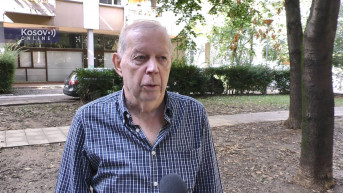
Serbia, especially after the events in Banjska, should not give up on the demand for the United Nations Security Council to urgently address the situation in Kosovo, former diplomat Zoran Milivojevic says, warning that there has been an escalation and that peace and security are at risk.
"The situation has definitely escalated, and it is an immediate task for the competent authority, which is the Security Council, to put the issue of the situation in Kosovo on the agenda in accordance with Resolution 1244. Conditions are being created, both politically and in terms of security, for this issue to be placed on the agenda, given that in October, Brazil, which has not recognized Kosovo, will chair the Security Council, followed by China," Milivojevic says for Kosovo Online.
He believes that after the events in Banjska, it would make no sense for any of the Security Council members, regardless of their political views, to even question such a session. Especially since issues such as security in Kosovo fall directly under their jurisdiction and because a binding resolution requires them to address this topic.
"For us, it is important to convey the situation in Kosovo on a global scale because, in accordance with Resolution 1244, it is a global issue, and it is the global responsibility of all member states and the Security Council as the body responsible for it. Therefore, it is important to point out that this is an escalating issue that requires political means to avoid jeopardizing peace and stability. Secondly, it would be significant for us just to have the question of the situation in Kosovo on the Security Council's agenda. This then proves that the Security Council does have jurisdiction and that the negotiations being conducted with the mediation of the EU and with the consent of the UN General Assembly are not yielding results. So, the topic should be where it belongs," Milivojevic says.
He also points out that regardless of the views that member countries may express during the session on Kosovo, it is important for the Security Council to discuss it and give instructions to KFOR.
"If the Security Council does not respond, we then enter a spiral of violence, and the question arises of what purpose KFOR serves and what is happening there. Therefore, it is important for us to persist in this session and insist on it, as well as on respecting Chapter 7 of the UN Charter, which mandates that peace and security be protected at all costs. And to insist on Resolution 1244, which is binding, as well as on the Security Council's obligations to react when there is an escalation on the ground," Milivojevic concludes.

0 comments