
Milivojevic: The large number of de-recognitions disrupts the dynamic of Pristina and its allies
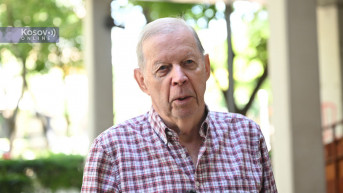
Retired diplomat Zoran Milivojevic stated that the large number of de-recognitions in the past decade has disrupted the “momentum” of Pristina, which is why, even after 17 years, it still cannot confirm its statehood—despite active lobbying by Germany, the United Kingdom, and Turkey.
“This dynamic has been disrupted by the very fact that over the past ten or eleven years there has been a significant number of de-recognitions. If I’m not mistaken, there have been 28. And President Vucic has announced more to come. But the core issue is not so much the policy of de-recognition, as the fact that Kosovo’s statehood has not been affirmed in 17 years, and that this is a failed project. That is evident even within Kosovo itself,” Milivojevic told Kosovo Online.
He emphasized that Kosovo has failed to establish itself “as a serious state or a functioning democratic space.”
“And that is the key fact. The process of de-recognition contributes to this and definitively brings the issue of Kosovo and Metohija back to the political arena. It is entirely clear that this cannot be affirmed as statehood by artificial means or by force, nor as something that could serve as a factor of stability and security,” Milivojevic noted.
He explained that this reality is becoming increasingly apparent “in one way or another.”
“It remains a fact that two-thirds of the world’s population does not recognize Kosovo. And it also remains a fact that we now have a different administration in Washington, one that views the issue in a different light. Without these elements, it is not possible to realize Kosovo’s statehood in the way that some envisioned at the beginning of this century,” Milivojevic believes.
Commenting on Serbian President Aleksandar Vucic’s statement that Turkey and several other countries are among the strongest lobbyists for Kosovo, Milivojevic said there is no doubt that Pristina receives its strongest support from Germany and the United Kingdom, while Turkey’s involvement is driven by its aim to secure influence in the Western Balkans through the Albanian factor.
“Germany is Kosovo’s most assertive lobbyist, and in the most direct way. Germany’s strategic position is that the Balkans are a zone of interest for German foreign policy, and it considers Kosovo a recognized state whose status defines the borders of the region—meaning new borders for Serbia without Kosovo and Metohija,” Milivojevic explained.
He added that the United Kingdom is also among the countries actively lobbying for Kosovo.
“It has traditional interests in the region, primarily from an anti-Russian standpoint. It views Serbia as being in Russia’s sphere of influence and sees Russian influence as a threat to its own strategic interests,” Milivojevic said.
Regarding Turkey’s role, Milivojevic noted that its position should be viewed through the ambitions of Recep Tayyip Erdoğan to promote the country as a regional or global power.
He pointed out that the foundation of Turkish policy and interests in the Balkans and Southeastern Europe is the Albanian factor.
“In Ahmet Davutoğlu’s ‘Strategic Depth’ doctrine from the early 2000s, this is clearly outlined, and the Turks have never abandoned it. Turkey sees the Albanian factor as the backbone, the infrastructure, and the strategic base for its presence in this region, and as a means to define its interests both in Southeastern Europe and in the wider region. This includes the Mediterranean and our entire neighborhood. In fact, Turkey has no other foothold here—apart from the diaspora—except for the Bosniak factor, which is significantly weaker than the Albanian one,” Milivojevic concluded.



0 comments