
Milivojevic: Serbia has the right to take all measures to protect Serbs in Kosovo and Metohija
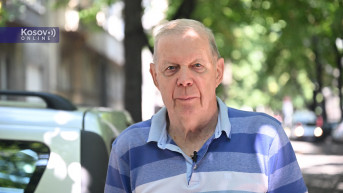
A possible diversion of the Ibar River near Ribarice would be a legitimate measure if its purpose were to protect the interests of the Serbian people in Kosovo, diplomat Zoran Milivojevic said.
Milivojevic views the actions of Pristina and international actors as part of an effort to present “Kosovo statehood” as complete and functional, although, as he says, it is not.
Regarding the Serbian president’s announcement that the possibility of changing the course of the Ibar River near Ribarice was being considered and that a working group would be formed to address the issue, Milivojevic told RTS that Serbia has the right to take measures to protect the Serbian people in Kosovo.
Speaking about current disputes over buildings and property in the area, as well as the recent demolition of Serbian-owned property, Milivojevic said that a possible diversion of the Ibar, if it contributed to creating conditions for the normal life and survival of Serbs, would be a legitimate move.
He noted that he was not familiar with the technical aspects of a possible project, but that, in political and legal terms, Serbia’s right to take measures to protect its interests was undisputed.
“Given that the Pristina side is taking measures that are both unlawful and creating conditions that undermine the possibility of the Serbian people continuing to live in that area, Serbia must take all measures and steps,” Milivojevic said, RTS reported.
Commenting on KFOR’s announcement of the beginning of the process of integrating the Kosovo Police into the security system, including patrols on the bridge over the Ibar and near the Visoki Decani Monastery, Milivojevic said that differing assessments of the security situation stem from different political interests.
While KFOR speaks of an improved security situation, Belgrade warns that the position of Serbs is becoming increasingly difficult. Milivojevic believes that part of the international community has an interest in demonstrating that Kosovo functions as a fully-fledged state.
“It is in the interest of part of the international community, that is, certain Western centers of power, to prove the thesis that Kosovo is a state, that it functions at full capacity, and that security conditions are such that there is no longer any need for KFOR to operate,” Milivojevic said.
According to him, this also calls into question the continued significance of the KFOR mission, as well as UN Security Council Resolution 1244.
“The main mission of KFOR in Kosovo and Metohija is security, and it operates under Resolution 1244, that is, under the mandate of the United Nations and the Security Council, which is responsible for peace. If you render that function meaningless, if there is peace and prosperity there, then you are effectively also opening the issue of Resolution 1244 and the UN mandate,” Milivojevic said.
He believes that the aim of such an approach is to further confirm Kosovo’s statehood while simultaneously calling into question the need for an international security presence.
“The aim is to confirm the issue of Kosovo and Metohija, that is, its statehood, in this way, and to call into question the UN mandate and the functioning of Resolution 1244 by demonstrating that there is peace there, that everything is functioning well, and that KFOR has no reason to exist,” Milivojevic said.
Speaking about the institutional crisis in Pristina, Milivojevic said that the inability of political actors to form functioning institutions is further evidence that, as he put it, Kosovo’s statehood is unsustainable.
“You do not have a functioning political system there. And that is one of the arguments showing that this Kosovo statehood is unsustainable, not only externally but internally as well,” he said.
He assessed that the institutional deadlock is being tolerated despite the activities of EULEX, KFOR, and UNMIK, while he said that Kosovo Prime Minister Albin Kurti, in his view, is seeking to retain power at all costs.
Milivojevic particularly highlighted the significance of Ukrainian President Volodymyr Zelensky’s position on the non-recognition of Kosovo’s unilateral declaration of independence, saying that the statement represents “a reaffirmation of the principles of international law.”
According to him, the possible opening of European Union accession negotiations with Ukraine could once again raise the issue of the so-called Cyprus model, that is, the way a state that does not control all of its territory is treated.
“Not only can Serbia raise the issue, but the very opening of negotiations with Ukraine brings the Cyprus model back to the table. They cannot begin negotiations with Ukraine and Moldova, which have territorial disputes, without also putting Serbia’s issue on the table,” Milivojevic said.
He believes that the European Union’s argument concerning “special circumstances” is insufficient because, as he puts it, the same principles and standards must be applied in dealing with states.
“Special circumstances mean that you do not control part of your territory, but there are no special circumstances when it comes to how a state is treated. This is not only a matter of international law, but also a matter of the principles, standards, and norms on which the European Union operates,” he said.
In his assessment, if the EU treats Ukraine as a territorially integral state during accession negotiations, the same issue would have to be raised in Serbia’s case.
Milivojevic said that Belgrade is not seeking special treatment, but rather the application of the same principles.
“Serbia is a full member of the United Nations within its internationally recognized borders, which include Kosovo and Metohija. Therefore, treat Serbia accordingly and nothing more,” Milivojevic said.
He assessed that the issue of opening EU negotiations with Ukraine is a major test for the European Union because, as he noted, it would simultaneously raise the question of its approach to Serbia and the status of Kosovo.
Milivojevic also recalled UN Security Council Resolution 1244, saying that it represents the legal framework confirming Serbia’s position regarding Kosovo.
“There has been no explanation from the outset. They tried to explain that the Kosovo issue was a case sui generis, but that argument has long since collapsed internationally. Two-thirds of the world does not recognize Kosovo. Second, there is Resolution 1244. It is fully consistent with international law,” Milivojevic concluded.


0 comments