
Milivojevic: Shiroka Pula cannot improve Kosovo's international standing
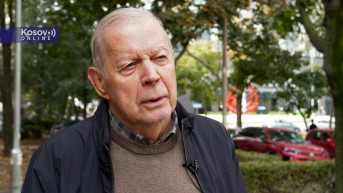
Career diplomat Zoran Milivojevic said that Kosovo's new president, Justina Shiroka Pula, can primarily play a role on the domestic political scene, while she cannot improve Kosovo's standing internationally.
“At one time, Vjosa Osmani had considerable autonomy on the foreign policy front, and everything Kosovo managed to achieve or mitigate in its relations with major powers or its allies was thanks to her. The situation regarding Kosovo's position is less favorable than before because of Albin Kurti's policies and his conflict with the US administration, which has no understanding for his policies. In this regard, I do not think the new president can do anything particularly significant. She has neither the same experience in international relations nor that kind of standing, and she also lacks the dynamism Osmani had. Therefore, her primary role will be on the domestic political scene,” Milivojevic told Kosovo Online.
He added that Shiroka Pula could do nothing about the verdicts against former KLA leaders either.
“The verdicts and the functioning of the Special Court depend on the will of Western centers of power, primarily the European Union, which is its financier and, in a way, its creator. We will see what position they take toward the new law and the attempt to call into question the functioning and the reach of this international mechanism, which convicted Thaci and the others. That is also a test,” Milivojevic pointed out.
In his view, Shiroka Pula's main contribution was that she untied the political knot at the last moment and enabled Kurti's government to begin functioning.
“Judging by the reactions of foreign actors, this is important to them, especially to countries that support Kosovo's independence, because it is one of the arguments that the system is functioning and has elements of a democratic system with institutions. Kurti remains in place with his policies, which are clearly not changing and will continue to enjoy the support of those centers of power that back Kosovo's independence, insist on affirming its statehood and maintain pressure on Serbia,” the diplomat said.
Asked how the West would react to the fact that one of Shiroka Pula's first official activities was paying tribute to a KLA leader, Milivojevic explained that the new president's political creed is linked to the Democratic Party of Kosovo, which was led by Hashim Thaci.
“We should expect support for Thaci and for all measures and actions intended to secure his release, so to speak, as well as to minimize the impact of the verdicts and the proceedings as a whole. As for the visit to the memorial to Adem Jashari, this is an issue for Albanians as a whole, and through it she is demonstrating her loyalty not only to that ideological and political structure, but also to the political agenda intended to dominate Kosovo and Metohija. The KLA is one of the symbols and instruments of the pursuit of a Greater Albania policy. The KLA is just as relevant in Tetovo, Tirana and New York, as well as among the diaspora, in Tuzi in Montenegro and in Pristina,” Milivojevic said.
Although the institutions have finally been formed, Milivojevic does not expect the international community to put pressure on Kosovo to fulfill its obligations.
“I am not optimistic in that regard. I do not think that this part of the international community will change its position. The strategic goal remains the affirmation of Kosovo's statehood, especially now, in the current global context, as broader geopolitical developments unfold, spheres of influence are being defined, and Western powers and centers of power have an interest in reaffirming both the events of 1999 and the entire political strategy, based on the German model of new borders in the Balkans, which envisages Serbia without Kosovo and Metohija and Kosovo's statehood serving those geopolitical and strategic interests,” Milivojevic concluded.


0 comments