
Milivojevic: US is preparing even greater pressure on Belgrade and Pristina in September
Together with the European Union, it seems that the dialogue between Belgrade and Pristina is currently on an annual vacation until the end of August. There are no meetings, no talks, no consultations, but there are problems that have been ongoing for months for Serbs in northern Kosovo. Could there be a turnaround in September? It appears that might be the case, considering the current state of affairs, Blic reports.
The situation is such that there are fewer and fewer products from central Serbia in stores in northern Kosovo, and the supply of medicines is uncertain. This is all due to the ban on Serbian trucks crossing the administrative crossing, which is yet another in a series of unilateral moves by Pristina Prime Minister Albin Kurti.
However, the latest information is that by September 1st, a working group should finalize an administrative project for the dismissal of mayors in municipalities in northern Kosovo, initiated through a petition by citizens. Could this be a step towards de-escalation?
It wouldn't be surprising if that were the case, given, for example, the statement from the US envoy for the Western Balkans, Gabriel Escobar, two weeks ago, who said that the US and EU wanted "significant progress this year" in Kosovo.
This intention is also indicated by Jeffrey Hovenier, the US ambassador to Pristina, who spoke openly about US priorities in Kosovo.
"We want to see two things. The first is the de-escalation of the situation in the northern part of the country, and the second is that Kosovo and Serbia fully implement the agreement reached in Ohrid. For Kosovo, it's important to urgently engage in talks with local Serbs so that they become part of the process. The Serbian Government must also fulfill its obligations in coordination with the international community," Hovenier stated.
Do they want to repeat the elections?
The fact that a Western diplomatic offensive is being prepared for next month is also evident in the fact that Pristina has formed a working group to prepare the procedure for the dismissal of four Albanian mayors in Serbian municipalities in northern Kosovo by September 1st.
Because of all this, it is almost certain that from September onwards, the West will be working intensively and simultaneously on de-escalation and the implementation of the Ohrid Agreement, to which they continuously refer.
Shattered illusions
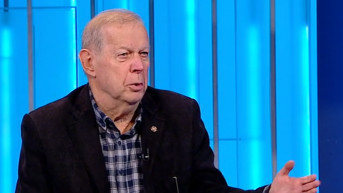
Diplomat Zoran Milivojevic emphasizes that one thing is certain – there is no rest for Western diplomats, especially American ones.
"From Hovenier's statements, it can be seen that the US still holds high its agenda for resolving the Kosovo issue. At a time when encouraging messages about progress in Serbian-American relations arrived and after the visit of the Serb List to Washington, Hovenier dispelled any doubt that the US would change its policy regarding the Kosovo issue. This is important considering our illusions that northern Kosovo might gain sovereignty," Milivojevic assesses.
Milivojevic believes that America is preparing to exert even greater pressure on Belgrade and Pristina in September.
"The US insists on the de-escalation of the situation in northern Kosovo, dialogue, and normalization of relations between Serbia and Kosovo as two sovereign states. The platform for this is the Ohrid Agreement, which practically confirms Kosovo's statehood through recognition of independence. In this regard, autumn will be very dynamic because time is running out for the West due to the elections next year in the EU and the US. The West wants to resolve the issue of de facto recognition of Kosovo's independence before the elections," Milivojevic analyzes.
The main pressure of the West on Belgrade
He adds that the Western Balkans is an area that America considers to be within its interests.
"When it comes to the Pristina groups that are drafting instructions for the dismissal of mayors in the northern part, it is evidence that America's pressure on Pristina is effective. The deadline is September 1st, when Washington expects concrete steps towards de-escalation and creating conditions for the implementation of the Ohrid Agreement," Milivojevic notes.
However, he says, Serbia has a say there as well.
"Belgrade will undoubtedly face new pressures from the West. The main pressure is not to question the participation of Serbs in the repeat elections in northern Kosovo. However, Serbia does not have the conditions to change its position, which means that Belgrade is in favor of dialogue but not on the points of the Ohrid Agreement that de facto mean recognition of Kosovo's independence. Moreover, Serbia does not consider the Ohrid Agreement to be binding and is firmly in the position that the Brussels Agreement should be implemented and the Community of Serb Municipalities formed," Milivojevic emphasizes.
He says that for Serbs in Kosovo, de-escalation means "removing the Kosovo Police and Albanian mayors from northern Kosovo and releasing all arrested Serbs."
"Serbs do not want to go to local elections again under the conditions dictated by Pristina. First, they demand the CSM, and then the elections, as the CSM is a guarantee for the survival of Serbs in Kosovo. I believe that despite Western pressures, Serbia will insist on Resolution 1244 and respect for international law," Milivojevic concludes.
Requests for the government in Pristina
Albanian analysts from Kosovo, Arber Fetahu and Albinot Maloku, share the opinion that after the summer break, "pressure on Belgrade and Pristina will be greater regarding the implementation of the Franco-German plan." However, they believe that the West will demand greater seriousness from the Government of Kosovo.
"High-level meetings within the dialogue between Kosovo and Serbia have not been seen for some time, and as a result, no concrete steps have been taken to implement the agreement and its annex for the normalization of relations," Albanian media in Kosovo assess.



0 comments