
Minic: Introduction of qualified majority in the EU important for enlargement and decision-making on Serbia and Kosovo
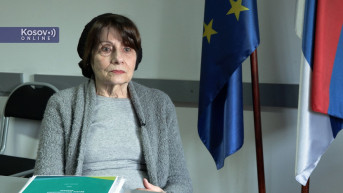
Changes to the decision-making process in Brussels, shifting from consensus to qualified majority, are crucial for the functioning of the European Union, especially for the enlargement process and decision-making regarding the relations between Serbia and Kosovo, Jelica Minic, President of the European Movement in Serbia, says. However, she points out that such reform will inevitably take time, and the current Brussels administration will likely leave this issue for the new convocations of the European Parliament, European Commission, and European Council, given that EU elections are scheduled for next June.
"This is a method related to the EU's foreign and security policy, and it has been circulating in the Union for some time; it is not a new thing. In the Franco-German paper on EU reforms and the enlargement process, it appears as one of the key issues. However, this will inevitably take time because it can only be implemented by the new composition of the European Commission, European Parliament, and European Council. It certainly won't be done by institutions that are practically outgoing. Since elections are coming in June, I don't believe that anyone would rush to implement substantial reforms in the EU," Minic says.
She emphasizes that when a problem arises, pragmatic solutions are already being applied.
"Such was the famous Orban coffee case when deciding on granting candidate status to Ukraine and Moldova. We can expect such creative solutions in the meantime, but it will certainly not be a definitive solution until the most important EU documents are changed. It is not the only reform, there is a whole list, but it is very important for decision-making on the relationship between Serbia and Kosovo and deciding on the future of Kosovo," Minic notes.
A change in the EU decision-making process that would eliminate the right of national veto would theoretically benefit Kosovo and remove the blockade by five EU member states that do not recognize it, she believes.
"It would be good to find some modus vivendi between Serbia and Kosovo by that time, which will certainly take at least a year. Otherwise, Serbs will massively leave Kosovo because they are exposed to a kind of terror and pressure from the authorities in Pristina. Unfortunately, there is no willingness for Serbs to integrate fundamentally. It is more of a pressure on them through a series of incidents. On the other hand, decisions on how they will live in Kosovo are made in Belgrade. Belgrade cannot know better than them. Serbs in Kosovo are not given the space to create the best way for their survival, the best way for relations with Pristina, primarily. If this continues, the result will be very unfavorable because we must be aware that in 2010, there were 120,000 Serbs in Kosovo, and today there are 80,000," Minic emphasizes.
Regarding the possibility of Kosovo obtaining candidate status for EU membership in 2024, which is again being called for by representatives of Pristina after the "green light" was given to Ukraine and Moldova to start accession negotiations, Minic assumes that it will be closely related to the further progress of the dialogue, i.e., the implementation of agreements.
"There is not much more talk about the dialogue than about implementation now. I think a lot will depend on that because, conditionally speaking, why would Kosovo be favored? Why would it be accommodated if what was accepted is completely ignored? And that is the new Brussels Agreement from February and the implementation plan from Ohrid. I think the attitude towards the implementation of these documents will strongly affect the EU's attitude towards both Kosovo and Serbia," our interlocutor says.
The President of the European Movement adds that Serbia was forced to take several steps after Banjska.
"First of all, the issue of the power system was resolved; there are no comments on the introduction of Kosovo license plates for motor vehicles, and it was accepted to organize elections. Now, the Kosovo side is delaying, but these are all steps that show some progress. However, it is a kind of coercion because the incident in Banjska showed how sensitive, vulnerable, and dangerous everything is," Minic points out.
0 comments