
Miskeljin: Kosovo's politicians will follow the European stance when it comes to US elections

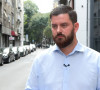
Kosovo's politicians should be cautious in showing support for Kamala Harris before the elections, although this hasn’t been the case so far, Marko Miskeljin, a researcher at the Center for Social Stability, says to Kosovo Online, adding that in this regard, we can expect them to follow the European stance and policy.
"The move to attend the Democratic convention in a private capacity – which is very important to emphasize – shouldn't be surprising considering that elections have been announced, and every move by Albin Kurti and his associates in the coming period should be interpreted in that light. It’s unlikely that much can be gained from that selfie, which is the result of all this. I think Richard Grenell’s words perhaps best describe the entire situation, where it is doubtful that Kamala Harris even knows who Albin Kurti is," Miskeljin points out.
He adds that such actions don’t have much of an effect and that what is much more important at such conventions are direct contacts with people who could potentially be in the administration or are currently in it. According to him, "some representatives from Serbia are currently doing this at the convention, without much exposure and cheap politicking, which is neither the time nor the place, and certainly not looked upon favorably by the hosts."
Regarding how Kosovo politicians will tactically support the Democrats, given the possibility of Trump returning to power, Miskeljin advises that "if they have any sense and understanding of politics," Kosovo's politicians should be cautious in showing support for Kamala before the elections.
"They certainly should be much more cautious, although that hasn’t been the case so far. We know that Albin Kurti began his first term in conflict with Donald Trump's administration, and it ended poorly for him, with his government being brought down. They can’t influence the outcome, and on the other hand, they can harm themselves significantly. Most likely, we can expect them to follow the European stance and policy. We see that even politicians within the EU have toned down their rhetoric toward Donald Trump, especially after the assassination attempt, and at least that segment of politicians no longer uses terms like 'threat to democracy' and 'threat to the Western order,' which is still the case with his opponents," our interlocutor believes.
He reminds that, when it comes to US foreign policy, one should never expect sudden changes.
"Even if Donald Trump wins a second term, we can’t expect any sudden shifts or changes in the policy itself, but we can expect what we saw in Trump's first term – pragmatism and a focus primarily on economic solutions, on issues important for the lives and survival of people, which was the spirit of the Washington Agreement. Certainly, in that case, when it comes to dialogue, we can expect the US to be more willing and pragmatic in listening to both sides, which hasn’t always been the case under a Democratic administration," Miskeljin notes.
He also recalls the case of Senator Bob Menendez, who for decades was the main Albanian lobbyist and who often had open conflicts with Donald Trump, and is now under serious corruption charges.
"This is something that will certainly remain in the memory of his administration, and of course, there's talk of Richard Grenell returning in some capacity, which certainly doesn’t suit Kurti’s administration," he assesses.
Regarding the elections in Kosovo, Miskeljin believes that Albin Kurti has proven that it is possible to win elections without strong US support.
"However, if we’re talking about whether it is possible to run that administration without support or even with opposition, as we are currently seeing – Albin Kurti opposing the entire US foreign policy – it is unlikely that anything can be effectively managed or achieved. However, that’s precisely the danger of the narrative and populism that Albin Kurti is pushing in Kosovo, because by constantly heating up the situation and raising tensions, he actually maintains his ratings to the point where he still holds the majority, and his only way to stay in power is by constantly raising tensions. This doesn’t benefit his allies, but they have no way to stop him in terms of internal politics. As long as Albin Kurti himself doesn’t feel sanctions, as long as he isn’t the target – not the Pristina administration, which may face difficulties in forming a budget, because the EU will halt some funding – the public won’t perceive it that way, and it won’t have consequences for his ratings," Miskeljin concludes.

0 comments