
Vladisavljev: Pristina's support will be directed toward the Democratic Party in the US
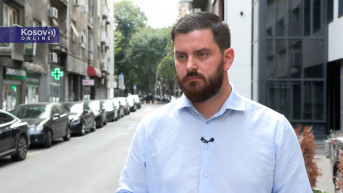
Stefan Vladisavljev, Program Coordinator of the BFPE Foundation for a Responsible Society, tells Kosovo Online that the support of Pristina officials currently in power will be directed toward the Democratic Party in the US, because, as he notes, the position of people from Donald Trump’s administration responsible for this region was heavily criticized.
He reminds us that 2024 is marked by various elections, from those for the European Parliament to the US elections in November, and adds that all of them have provided an opportunity to get a clearer picture of regional politicians and which side they lean toward.
"Whether the new administrations that will be established in Brussels, as well as in Washington, will align with their expectations, and what the potential repercussions will be for regional dynamics, particularly in the context of bilateral relations and some unresolved issues such as the Belgrade-Pristina dialogue? Given that the Democratic administration is currently responsible for both domestic and foreign US policy, if Kamala Harris succeeds in securing a new mandate for the Democratic Party in November, it can be said that continuity is the first thing to be expected, and we won’t see a significantly different stance since the establishment at the level of the State Department and other parts of the administration responsible for the Western Balkans will likely remain largely unchanged," our interlocutor emphasizes.
He points out that Albin Kurti’s participation in the Democratic National Convention in Chicago is not surprising, given that the position of Donald Trump's officials responsible for this region, particularly Richard Grenell, was heavily criticized by Pristina officials.
"Therefore, it is expected that the support from Pristina officials currently in power will be directed toward the Democratic Party, much more than toward the Republican Party, given that Donald Trump is once again a candidate for president after losing the 2020 election," Vladisavljev assesses.
He reminds that the Washington administration has shown a strong commitment to the dialogue process.
"The remaining issue is the fact that the dialogue has not resulted in concrete progress despite the strong pressure coming not only from Brussels but also from US envoys. They have often been highly critical of the authorities in Pristina; however, there is still a sense that the concrete repercussions that would lend additional legitimacy to the pressures from Washington, especially toward officials in Pristina, have been lacking. We must not forget that whoever gets the mandate for the new US president will not assume the position until January 2025, so this additional time will leave room for regional politicians to adjust their stances, both in Pristina and Belgrade," our interlocutor believes.
He observes that there are "clear inconsistencies in what some officials in both Belgrade and Pristina have nominally committed to in the dialogue process compared to the outcomes of that dialogue."
"This is actually cited as the main point of contention between the current US administration and the position held by Albin Kurti as the leading politician in Kosovo at this time," Vladisavljev notes.
In his opinion, the problem that Kosovo has faced is the inconsistency within the opposition and the opposition's lack of strength to compete with Albin Kurti in the past period, which, he adds, gave him the opportunity to centralize power and increase his popularity.
"In the upcoming period, especially as we enter the campaign period for the elections themselves, it remains to be seen whether the US will continue to offer tacit or clear support to Albin Kurti, despite his lack of a constructive role in the dialogue process, or whether that support will shift to those parties that are currently in opposition," Vladisavljev concludes.

0 comments