
Momirovic: Kurti is destroying every attempt at economic connectivity in the region
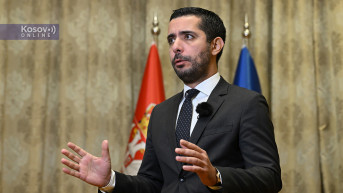
Thanks to the courageous leadership of Serbian President Aleksandar Vucic and Albanian Prime Minister Edi Rama, who initiated the "Open Balkan" initiative, a significant step forward has been taken for the Serbian and Albanian people, as the Serbian Minister of Domestic and Foreign Trade, Tomislav Momirovic, said. He emphasized that, on the other hand, Kosovo Prime Minister Albin Kurti was destroying every attempt at economic connectivity in the region by refusing to participate in regional initiatives and imposing bans on Serbian goods.
In an interview with Politika, Momirovic stated that Kurti's actions hindered the establishment of the "Open Balkan" initiative and the Berlin Process.
"Thanks to the brave leadership of Aleksandar Vucic and Edi Rama, we have made great strides for the Serbian and Albanian people, bringing states closer on economic grounds, not ignoring political differences but respecting a common goal – raising the economic standard of our peoples. Unfortunately, Prime Minister of Kosovo Albin Kurti is destroying every attempt at economic connectivity in the region. His actions hinder the establishment of the 'Open Balkan' initiative and the Berlin Process, but we do not give up on economic connectivity," Momirovic emphasized.
He reminds that Serbia has been facing a ban on Serbian goods in Kosovo by Pristina for more than five months and that the blockades have been ongoing for about two years.
He believes that such behavior from Pristina harms not only Serbs and Serbia but also Albanians in Kosovo and the entire economy in the region, and he emphasizes that trade bans and disruptions must be stopped.
"For more than five months, we have had a trade ban in Kosovo, but we have practically faced blockades for almost two years. The economy must be the foundation of connectivity, and this destructive man in Pristina is destroying everything in front of him, ruining relations between Serbs and Albanians. This practice of trade bans based on ethnic principles must be stopped. I don't know how Europeans tolerate it; the economy should not be part of the political process," Momirovic pointed out.
Speaking about trade cooperation between Serbia and regional countries, Momirovic emphasizes that Bosnia and Herzegovina is Serbia's largest partner, but the potential for exchange between the two countries has not been fully utilized and that there is still room for improvement.
He highlights the importance of Bosnia and Herzegovina becoming part of the "Open Balkan" initiative in the future.
"Our biggest partner is Bosnia and Herzegovina. Although the exchange is about 3.2 billion euros, the potential has not been fully utilized. Our economies are compatible, deeply integrated, and connected, and it is very important that Bosnia and Herzegovina becomes part of the Open Balkan initiative in the future. It is not about politics but about the economy, new companies, higher wages, better prospects for the youth, free trade, and open borders. It is important to create a better perspective for the youth," Momirovic said.
He also notes the cooperation between Serbia and the EU, stating that Serbia is committed to synchronization with European standards and that 60% of its trade is with EU countries.
However, as he added, Serbia does not give up on its vision – the policy of independent state management and economic sovereignty.
"We are on a stable path to the EU, which is our most important economic partner – 60% of our trade is with EU countries. We are working on the implementation of European standards, on synchronizing our economic and political systems with the EU system, but we do not give up on our political vision, on the policy of independent state management and economic sovereignty, and we will insist on that. Serbia has been economically strengthened in recent years; our president is recognized as a great leader, even though Serbia is not a large country. Bold steps in economic policy have allowed us to more than double the standard in the last 10 years, leading to a reduction in unemployment from 28.9% to less than 10%," the minister stated.
He emphasizes that Serbia is implementing a series of measures to improve the lives of its citizens, such as the "Better Price" campaign, which, as he says, other countries in the region are copying.
"The 'Better Price' campaign has had positive effects in the region – it has been copied. In recent years, we have tried to establish new economic relationships, to connect the interests of our people with those of others in the region, and to strengthen economic and trade ties. What we have achieved with the 'Better Price' campaign is a domino effect of lowering prices through a large number of other actions. Most products are in a constant market battle; all traders and producers compete to further lower prices," Momirovic said.
He notes that inflation has been steadily declining for six to seven months, and in October, it entered the single-digit zone.
He also adds that Serbia has signed a Free Trade Agreement with China, and a similar agreement is being worked on with the UAE.
"This government, which is implementing the policy of Aleksandar Vucic and the Serbian Progressive Party, has done a lot of good things. Unfortunately, two tragedies have significantly affected political stability in recent months – two tragic accidents that happened at the 'Vladislav Ribnikar' school and in villages near Mladenovac and Smederevo, and then the tragic event in Kosovo and Metohija. However, we have managed to ensure the continuation of economic growth, an increase in foreign direct investments, a tendency to reduce unemployment, regional peace and stability, even though we have been facing significant political pressure in Kosovo and in Bosnia and Herzegovina. In short, the work of this government is marked by economic progress and political stability – not only in Serbia but also in the Southeast Europe region," Momirovic concluded.
0 comments