
Moore: CSM must be formed as soon as possible
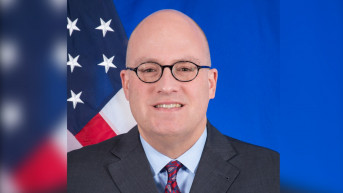
Former U.S. diplomat and former Head of the OSCE Mission in Bosnia and Herzegovina, Jonathan Moore, stated for Kosovo Online that the year 2024 would be "difficult and significant," emphasizing that the Community of Serb Municipalities, as an obligation of Kosovo, must be formed as soon as possible. He noted that progress must be made in the normalization of Serbia-Kosovo relations.
"This has been a tough year, and the next one will be tough and significant. The situation is complicated, not only in the Balkans, Kosovo, Serbia, and Bosnia and Herzegovina. Next year, we can expect elections in northern Kosovo. There must be new elections for new mayors, legitimate ones," Moore said.
He reminds that there will also be local elections in Bosnia and Herzegovina.
"There will be elections in the United States in 2024. In that context, including the recent elections in Serbia two weeks ago, we must somehow move forward. That will depend on the citizens, domestic and local institutions, and parties that won the elections – to move forward," Moore stated.
Regarding the upcoming elections in the U.S. and the EU, he says that elections are very important, even a crucial part of the democratic process, but they can also be an excuse for politicians to do nothing, expecting election results.
"It is important, and it is clear in Belgrade and Pristina, to take many positive steps towards understanding between Serbia and Kosovo. Something more positive at all possible levels. We have seen positive steps from Serbia with license plates. Authorities in Belgrade and Pristina need to be more careful because it is not just a question of Kosovo; it is also a question of relations with the EU and the strategic situation in Europe," Moore emphasized.
Regarding the U.S. elections, he does not believe that the main U.S. policy on the Balkans will change because both Republicans and Democrats have the same views on this matter.
"We have paid a lot of attention to the Balkans, and we want to see progress. As someone who has been in the Balkans for more than 30 years, I believe that this is also a question of sovereignty, integration into European structures, and the European Union," Moore says, adding that it is clear who is leading the government in Serbia, who is the prime minister in Kosovo, and that these people are responsible for finding practical solutions for citizens.
Speaking about Albin Kurti, he points out that he regrets that Kurti does not have different views and perspectives toward the U.S. but that he is legitimately elected.
"He is elected, his Self-Determination Movement, because people voted for them. The U.S. did not choose him; the people in Kosovo did. Therefore, Kurti must take positive steps, be patient and practical, and show the ability to achieve results because that is what people want to see, not rhetoric," Moore indicated.
It is important to demonstrate the ability to compromise because, he says, compromise is not a bad thing.
"Perhaps instead of compromise, we should talk about common victories, which would be in the interest of the citizens of Kosovo and all citizens in the Balkans. That must be his priority," Moore is convinced.
Asked whether Kurti will form the Community of Serb Municipalities, he responded – the CSM must be formed as soon as possible because it is high time.
"We have been talking about the CSM since 2013, for 10 years. It is high time to have such a community. It has been Kurti's obligation from the beginning. The CSM will have powers at the municipal level. It is not a state or sovereign matter; it is not any entity, as some have said... That is all just rhetoric; the Community of Serb Municipalities must be formed as soon as possible," Moore emphasized.
As a former Head of the OSCE Mission in Bosnia and Herzegovina, when asked if that country has a future, he responds that he is sure it does, noting that the past, present, and even the future of Bosnia and Herzegovina are complicated.
According to him, the Dayton Agreement ended the war, but many were not satisfied with that agreement, as they were not in 1995.
"That is the framework for Bosnia and Herzegovina. I cannot say that the Constitution is perfect. Politicians in Bosnia and Herzegovina, if capable, in both entities, have the right to change the Constitution, electoral law, and others, to make Bosnia and Herzegovina more functional. Unfortunately, so far, for various selfish, party reasons, they have not been able to do it positively," Moore noted.
As he says, Bosnia and Herzegovina is a sovereign state, and entities do not have the right to secede.
"If Bosnia and Herzegovina politicians desire to have a functional state in the EU, then they must do it more efficiently and better as soon as possible. What are the chances for that in an election year... It's hard, but Bosnia and Herzegovina is and will be a united sovereign state," Moore is convinced.
On the question of whether the OSCE can survive all the turmoil in that organization, he responds that it is difficult when one of the countries, referring to Russia, does not play the role it should, neither in the OSCE nor in other contexts, due to the unjustified invasion of Ukraine.
However, he says that the OSCE, thanks to its missions and offices, still has an important role and, in a neutral context, will continue to play that role.
Regarding whether there is understanding in the U.S. for Serbia's position on not imposing sanctions on Moscow, he says that it specifically depends on individuals, and those in the U.S. who follow events in the Balkans know that both Serbia and neighboring countries play an important role and want to see more cooperation and better relations between Balkan countries.
"Serbia is in a difficult position. We must respect democratic results and elections. When the turnout for elections was not huge, it was clear that the majority of the population had positive attitudes toward Russia, primarily for Orthodox reasons... Therefore, it is impractical to demand that Serbia impose sanctions on Russia, as other countries have done," Jonathan Moore concluded.


0 comments