
Moore: Kosovo was not a topic in Dayton; Washington was clear on that point
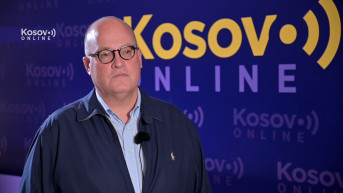
Ahead of the 30th anniversary of the signing of the Dayton Agreement, senior fellow at the Atlantic Council, Jonathan Moore, emphasized that the agreement should be viewed as a success because it ended the war in Bosnia and Herzegovina. He also stressed that the situation in Kosovo at the time was not a topic discussed in Dayton.
"As for Kosovo, it was not a topic in Dayton, and for very clear reasons—it wasn't a matter concerning Croatia or Bosnia and Herzegovina. It was earlier, in 1994, when I received [Ibrahim] Rugova in Washington. Kosovo was on the minds of the U.S. government and the State Department, but Dayton was a separate situation focused solely on Bosnia and Herzegovina. The issue of Kosovo became active, and increasingly so, in 1998–1999. There were individuals and others who wanted to ‘resolve’ the Kosovo issue, but the signal from Washington was clear—perhaps not to everyone, but it was clear. The Dayton Agreement and the negotiations in Dayton were focused on Bosnia. We were monitoring the situation in Kosovo, we knew there was a crisis, but at that moment we were discussing Bosnia, step by step. We could still, outside of Croatia and Bosnia, talk with Belgrade, Pristina, and NGOs about the situation in Kosovo," he said.
Moore also pointed out that there is often talk about a "Dayton 2," but he believes this is largely misguided.
"First of all, the Dayton Constitution and Agreement, as I’ve said, are not perfect. But to revise everything under such conditions would be extremely difficult. Bosnians and Herzegovinians not only have the right but also the duty to reform and update the existing Constitution. That is not something for the international community," said Moore.
He argued that the Dayton Agreement should still be viewed as a success.
"Ending the war was the priority and focus of the U.S. administration at the time, as well as of all countries around the world. It was high time to put an end to a horrific war filled with too many victims and atrocities. The Dayton Agreement should still be seen as a success. That doesn’t mean everyone was happy with it—and they weren’t in November 1995 either—but it stopped the war," Moore said.
He noted that peace agreements are never perfect and added that there is no example of a "pure success" in which all sides are satisfied.
"Bosnia and Herzegovina has been an independent and sovereign state for thirty years, and there haven’t been major conflicts or a return to war. The U.S. and EU, as well as Serbia and Croatia, are guarantors of the agreement. The Dayton Constitution is quite complex, as it includes two entities in the Federation and multiple cantons, a total of 143 municipalities, including Brcko with a special status," he added, underlining that Bosnia and Herzegovina is not as functional as it should be, often due to a lack of consensus among the three Presidency members in Sarajevo.
Ambassador Moore was also a guest on the podcast Context, which will be broadcast on Saturday at 12 p.m. on our website and YouTube channel.



0 comments