
Nastic: Kurti is working on escalation every day; the Serbs in Kosovo face ethnic cleansing
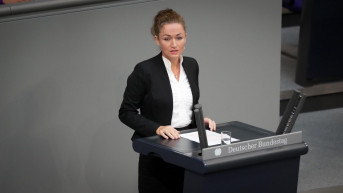
Member of the Left in the German Bundestag, Zaklin Nastic, stated that Kosovo's Prime Minister Albin Kurti was working daily to escalate the situation and that the Serbs in Kosovo were facing ethnic cleansing, RTV reports.
Nastic, in an interview with Podgorica's Adria TV, stated that instead of working on de-escalation in Kosovo, Albin Kurti was striving daily to escalate the situation and provoke a conflict between Serbia and NATO.
"First and foremost, I want to emphasize that the recent armed escalation in Kosovo shocked me, and I unequivocally condemn it. Those responsible must be held accountable through a lawful process. It is of the utmost importance that this incident is thoroughly and transparently investigated and clarified. This includes granting access to the crime scene and evidence to international independent observers - although, based on the current situation, it is not expected to happen," Nastic said.
She emphasizes that the events did not happen "out of the blue".
"Since coming to power, Albin Kurti has initiated nationalist polarization of ethnic groups in Kosovo. In the worst case, this leads to violence, as we have seen in the village of Banjska and in many other violent attacks by Albanian extremists in the past. Not only have NATO and Western countries supported this dangerous course for years, but they have also politically wished for and intended it," Nastic stated.
She cannot stress enough that the path to sustainable peace is through dialogue.
"However, dialogue can only be successful if previously reached agreements are respected. In the case of the Brussels Agreement from 2013, this did not happen; on the contrary, Kurti is primarily responsible for this failure," Nastic stated.
Asked to comment on the statement by economist and NATO lobbyist Gunther Fehlinger, who wrote on the X social network regarding the events in Kosovo that "a war of the Serbs against Kosovo has begun in Banjska," Nastic says that his recent statements can only be described as irrational and dangerous.
"However, they are in line with the pattern typical of a demagogue. For years, he has crossed red lines several times, dangerously and unnecessarily fanning conflicts. He is now seriously considering a new military attack on Serbia, which I consider utter madness. Given such irresponsible rhetoric, it would only be appropriate for Fehlinger to be finally removed from the positions he holds. Whether this will actually happen remains uncertain," Nastic said.
On the observation that Serbian President Aleksandar Vucic has shown himself to be a statesman who resists pressure to impose sanctions on the Russian Federation while clearly emphasizing Serbia's European path, Nastic confirms this and emphasizes that President Vucic is facing significant pressures and attacks.
"Serbia is the only country in Europe that has not joined the senseless economic sanctions against Europe's primary energy supplier. Every nation, including Serbia, has the sovereign right to independently decide from which country it will obtain energy. In contrast, in Germany, we are experiencing the consequences of this absurd policy firsthand, primarily led by blind Green activists in the government. While our economy is struggling, endangering countless jobs, as leading Russian institutes clearly predict, the Russian economy is gaining momentum," Nastic says.
She deems it absurd and mentions that Germany indirectly imports Russian oil through third countries and at considerably higher prices.
"Heating costs in Germany are skyrocketing, which is causing many citizens to anxiously anticipate the approaching winter months, all in one of the wealthiest countries in the world! The President of Serbia has made the right decision to spare his population the consequences of such a policy. Furthermore, it is both right and crucial to resist external political pressure and demands to withdraw from Russia and China," she noted.
She emphasized that the Serbian population did not need lectures on illegal wars, flight, and displacement.
"They are the ones who experienced such a war through the NATO aggression and now witness the double standards that characterize current policies, especially of NATO," Nastic stated.
Regarding the participation of the Serbs in the new Government of Montenegro, Nastic emphasizes that it is essential for all ethnic groups in the former Yugoslav states to be adequately represented in government structures.
"This is not only a matter of justice but also serves as a preventive measure against potential ethnic tensions based on the terrible experiences of the 1990s. For example, Serbia has taken a leading role in this regard by successfully integrating Bosniaks from the Sandzak region into its Government. This has been partially achieved through ministerial appointments, providing Bosniaks with a significant opportunity for influence. As a result, ethnic tensions have been minimized. Serbia's integrative approach is worth emulating, especially by other countries in the region, including Montenegro," she stated.
She pointed out that the treatment of the Serbs in Montenegro was conspicuously contrary to the values of democracy, equality, the rule of law, and the protection of human rights, including the main rights of minorities that the European Union so often invoked.
When asked whether she believed that the Serbs in Montenegro deserved to be in the government and how much that would mean for the stability of this country, Nastic says:
"Of course, minorities should have the right to appropriate parliamentary representation and be able to equally exercise their rights".
0 comments