
Nedos: There are pressures on Greece, but recognition of Kosovo is a distant possibility
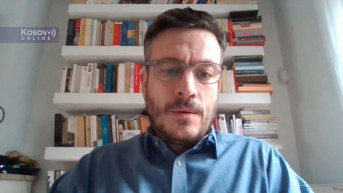
Greece has a very firm position on Kosovo. Certainly, there are pressures on Greece from its partners, especially Germany and the US, to recognize Kosovo, but I would say that Greek recognition of Kosovo is a distant possibility, Vassilis Nedos, a foreign policy commentator from Athens, says for Kosovo Online.
In recent months, relations between Greece and Albania have become quite tense due to the case of the Greek mayor of the Albanian city of Himara, along with speculations that Athens might soften its position on Kosovo to resolve its problems with Albania in its favor.
However, Nedos states for our portal that these two issues are not connected, and he does not believe that Greece will take a step towards recognizing Kosovo.
"Greece has a very firm position on Kosovo. About a year and a half ago, we opened the Kosovo Office of Commerce, and the presence of Kosovo in Athens was diplomatically upgraded, but that's as much as we can do. As long as countries like Spain or Romania, not to mention smaller ones like Cyprus or Slovakia, do not recognize Kosovo, I am not sure that Greece will take a step towards recognition. I would say that Greek recognition of Kosovo is a distant possibility," Nedos says.
Although Kosovo officials often state that Greece will be the first of the five EU countries that do not recognize Kosovo to take that step, our interlocutor says he has been hearing this for at least the last five years, but it has not happened yet.
"It is expected that Kosovo officials have such a position. It is a long way for something like that to happen. I don't think anything similar is currently imminent. At this point, I would expect further cooperation between Kosovo and Greece, perhaps in the form of some military exercises within the NATO framework, as Greece is a NATO member and NATO guarantees security in Kosovo. Something like that could happen. Also, there are Greek companies interested in energy projects or economic cooperation with Kosovo, but recognition of Kosovo's statehood is something distant," Nedos is convinced.
Greek-Albanian relations, says Nedos, are an entirely different topic.
"Himara is a city in southern Albania that is important to Greece because there is a Greek indigenous minority living there, they have been living there forever. It is also a place of great tourist importance, and the Albanian government has investment plans there. Municipal elections were held in Albania at the beginning of May, and a few days before the elections, Beleri, the mayoral candidate, was arrested on charges of paying voters to vote for him. The Greek government complained about this from the beginning, and for seven months now, we have had a problem with Albania over this issue. Greece says that the Albanian authorities should allow Beleri to take the oath as mayor, as he was elected mayor of Himara, even though the Albanian authorities arrested him, and then their courts can independently decide whether there was corruption or not, which is not Greece's job. Beleri, they believe, should have the right to a fair trial, and the presumption of innocence should be respected," Nedos explains how the dispute between Athens and Tirana arose, leading Greece to block the EU accession talks between the EU and Albania.
He adds that, for Greece, the Beleri case is related to the issue of the rule of law.
"Both sides hold onto their positions. Greek Prime Minister Mitsotakis stated after the European Council that the Beleri case was not a bilateral issue between Greece and Albania but related to the rule of law and the European acquis, while, on the other hand, Edi Rama stated that, for him and his government, this was a bilateral issue that had nothing to do with EU accession talks. Greece has no interest in blocking accession talks for Albania, but the rule of law and respect for the rights of Greeks in southern Albania are very important for the Greek government," Nedos concludes.



0 comments