
Nikolic: Serbian people in Kosovo are yearning for freedom
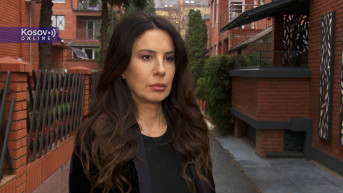
President of the Serbian Parliament’s Committee on Kosovo and Metohija Danijela Nikolic said that the situation in Kosovo reflected the difficult reality the Serbian people had faced for decades, particularly over the past five years, RTS reported.
Nikolic said that the security situation was the “worst aspect” and that, above all, the people in Kosovo were yearning for freedom.
“Over the past five years, from 2021 to 2026, we have had more than 800 ethnically motivated attacks. Every news report you follow from Kosovo and Metohija concerns some development that is difficult for the Serbian people,” Nikolic told Radio Belgrade.
She added that the closure of institutions was a calculated attempt by Albin Kurti to render the Association of Serb-majority Municipalities, which is part of the Brussels Agreement, meaningless, with the aim of completely marginalizing the Dialogue.
Commenting on the continued detention of Serbs and accusations of war crimes, she said that the international community was turning a blind eye and, through its silence, effectively endorsing Pristina’s actions.
“Many proceedings that are being conducted unfairly rely on two witnesses. These staged trials show that Albin Kurti and the authorities in Pristina are doing whatever they want. They have the police, the courts, and prosecutors under their control. It is not the law that delivers judgments there, but politics,” Nikolic said, RTS reported.
Explaining the latest developments concerning the Ibar Bridge, she once again warned that the transfer of responsibilities from KFOR to the Kosovo Police was being used in an attempt to dismantle “the last bastion of sovereignty in that part of the territory.”
She also referred to the recent case involving Nenad Raskovic from the village of Dren near Zubin Potok, saying that it was a clear provocation and that he had been arrested “simply because he is a Serb.”
Nikolic noted that the caretaker status of the current government in Pristina did not preclude implementation of the Brussels Agreement, nor did it relieve the international community of its obligation to act as a mediator.
“That is their international obligation, and the international community, as mediator, has a duty to remind them of that obligation. We have done everything that was up to us; it is now up to Pristina to do its part,” Nikolic stressed, adding that the Association of Serb-majority Municipalities remained an international obligation regardless of the political circumstances in Pristina.
Speaking about her personal experience and the situation of the youngest members of the community, she stressed that Serbian children in Kosovo were growing up in completely unsafe conditions and behind barbed wire.
She particularly highlighted concerning data regarding the safety of women in North Mitrovica, especially during the evening hours, while also criticizing parts of the civil society sector in central Serbia.
“The Office for Kosovo and Metohija is, of course, always fully committed to its task, but non-governmental organizations in central Serbia do not speak about this, nor are they interested in it, which is also deeply disappointing because I believe that, when it comes to our people, we should all stand united,” Nikolic concluded.




0 comments