
Nikolic: Today’s verdict a brutal act of political retaliation and institutional violence against Serbs
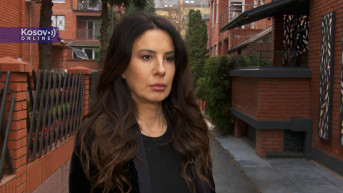
The Chair of the Committee for Kosovo and Metohija in the National Assembly of Serbia, Danijela Nikolic, stated that the judgment delivered in the Banjska case—sentencing Vladimir Tolic and Blagoje Spasojevic to life imprisonment, and Dušan Maksimovic to 30 years—does not constitute justice but represents, as she said, a brutal act of political retaliation and institutional violence against Serbs in Kosovo.
“This is not the outcome of an impartial and fair judicial process, but a pre-arranged conclusion to proceedings in which the verdicts were written before the evidence was even considered. In an atmosphere lacking transparency, without clear determination of individual responsibility and without convincing facts to justify such draconian sentences, a decision has been rendered with a purely political objective—to intimidate, humiliate, and disenfranchise the Serbian people,” Nikolic stated.
She added that the fact that the defendants were not present at the pronouncement of the judgment further reveals the nature of the proceedings.
“This was not a court, but a political stage. Individuals were not on trial—a people was. The process was not about establishing the truth, but about finding a pretext for punishment. Such a ‘verdict’ constitutes a legal precedent that undermines the very notion of a fair trial, in a setting where such standards effectively do not exist. It sends a clear message that for Serbs there are no rights, no justice, and no equality before the law. When the harshest penalties are imposed without clear and unequivocal evidence, this is not justice—it is persecution,” she added.
Nikolic further emphasized that this case is not an isolated one, recalling that in recent years there have been numerous proceedings against Serbs marked, in her view, by selective justice, prolonged pre-trial detention, reliance on contradictory or insufficiently verified testimony, and evident political pressure.
“Numerous cases in which Serbs have been arrested on charges of war crimes or threats to the constitutional order, often without clear and sustainable evidence, point to a pattern in which the judiciary is used as a tool of political confrontation. Such practice creates an atmosphere of fear and legal uncertainty, where any Serb can become the target of arbitrary proceedings. Instead of serving as a guarantor of justice, the system becomes an instrument of pressure, further encouraging emigration and undermining the survival of the Serbian population in Kosovo and Metohija,” she explained.
According to her, such decisions do not contribute to peace but rather to destabilization and the deepening of conflict.
“This is not merely an attack on individuals, but an organized attempt to impose punishment, imprisonment, and darkness upon an entire people, with the aim of permanently marginalizing and removing them from public and political life. Such decisions do not lead to peace, but to destabilization and escalation. That is why we must speak clearly and without hesitation—this is not a verdict. This is retaliation. This is a message of force, not of law. It is proof that justice for Serbs in Kosovo and Metohija does not exist,” Nikolic concluded.

0 comments