
Nikovski: The key message from Vucic and Davkova is that the peoples of the region should solve their own problems
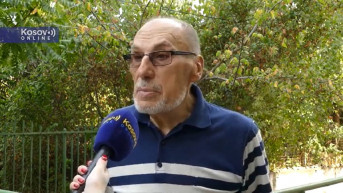
Political analyst from Skopje, Risto Nikovski, emphasizes that the key message from the meeting between the President of North Macedonia, Gordana Siljanovska Davkova, and the President of Serbia, Aleksandar Vucic, is that the peoples of the Western Balkans should solve their own problems, and that the region should follow the cooperation between Skopje and Belgrade.
"Davkova sent a message about cooperation, especially regional cooperation. Because if we don't have that, we won't get anywhere. Foreign policy and cooperation with others rest on one's own borders. If you cooperate here, you will cooperate with everyone and you will make progress. If you have problems here, and here is also the historical legacy, you can always find a reason to be troubled and a reason to argue. I think the messages sent by Davkova and Vucic were positive," Nikovski said for Kosovo Online.
He assesses that the President of Serbia focused on the economy in connecting the region.
"Vucic spoke about railways and connectivity, he spoke about economic cooperation, about the 'Open Balkan.' These are messages that no one can dispute," Nikovski said.
He says that it is important that Serbia allowed North Macedonia to celebrate Ilinden at the Prohor Pcinjski Monastery, which he emphasizes is "the key and root" of modern North Macedonia.
"Now the President of Serbia came in person, and these are gestures that must be appreciated. They could have allowed us to go there and pay our respects, but without the president. This is, however, a gesture of goodwill, a gesture of friendship, and it must be respected," Nikovski emphasized.
When asked whether the topic of Kosovo and the possible change in North Macedonia's foreign policy towards the region was discussed during the "tête-à-tête" meeting between the two presidents, Nikovski believes that there was neither the space nor the opportunity to discuss it at this time, but it is certain that these issues will be the subject of future meetings because a stable region is in the interest of all Western Balkan countries.
"It is certain that both topics will be discussed because we live in the same region, and everything that happens in Kosovo affects Serbia and Bosnia and Herzegovina, Montenegro, Macedonia, and Albania. And vice versa. So yes, all these problems that arise in the region affect everyone, and I think the key message from Siljanovska Davkova is that we solve all problems among ourselves, not at some green, red, or yellow tables, because then they treat us as if we are immature or undeserving to be equal. I think this was a nice act of regional cooperation that everyone should follow," Nikovski concluded.



0 comments