
Novakovic: A joint solution for the Western Balkans – a highly optimistic scenario
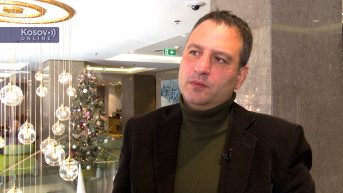
Senior Fellow at the Center for International and Security Affairs (ISAC Fund), Igor Novakovic, described the recently presented non-paper for the Western Balkans as a "highly optimistic scenario" that is, for many reasons, unattainable.
"It seems to me that this is a very optimistic scenario from anyone's perspective, in the sense that some issues that are so complex could be resolved so easily through a single international conference. My other question is whether the conditions exist for organizing such a conference, given the current global situation," Novakovic stated for Kosovo Online.
The non-paper, published a few days ago in the press in Bosnia and Herzegovina, proposes solutions to all outstanding issues in the Western Balkans, including the region's membership in NATO and the EU.
Although the agreement would reportedly have the backing of the United States and the United Kingdom, Novakovic argues that the EU would need to serve as an additional guarantor to solidify the agreements reached.
However, he warns that it is impossible to equate the idea of "collective membership" in NATO and the EU.
"These are two fundamentally different processes," he said.
"Certainly, the accession of Western Balkan countries to NATO is much easier than joining the EU. Meeting political standards is simpler. As for defense-related standards, Western Balkan countries are largely already aligned. There is interoperability with NATO, primarily through the Partnership for Peace program," Novakovic emphasized.
On the other hand, the integration of the Western Balkans into the EU is a much lengthier process.
"The story of EU accession is different. It involves much deeper structural reforms, and the process takes longer, so this cannot be the focus here. However, all Western Balkan countries certainly have a European perspective," the analyst stressed.
He also expressed skepticism about the ability of international conferences to resolve the region's longstanding issues.
"I have the impression that this is only possible after significant conflicts. Historically speaking, not just for the Western Balkans but for all hotspots, when you have major armed conflicts, it becomes possible to resolve certain issues through a single conference. However, in this case, you have smoldering issues while the conflicts themselves were resolved long ago, with only minor escalations that do not indicate a new conflict. Hence, the question arises: what would be the interest of the parties invited to such a conference to agree to a compromise, given that this is a political matter," Novakovic clarified.



0 comments