
Oberg: Without the bombing, a solution could have been found through negotiations
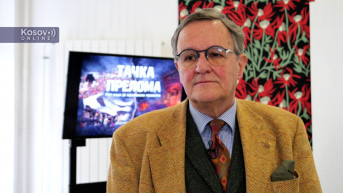
Jan Oberg, Director of the Transnational Foundation for Peace and Future Research (TFF), who served as an adviser to Ibrahim Rugova during the 1990s, stated in an interview for Kosovo Online that the 1999 NATO bombing of the Federal Republic of Yugoslavia gave Kosovo Albanians what they consider an independent state, while it brought immense suffering and humiliation to the Serbs. At the same time, he believes that a negotiated solution would have been possible had there been no bombing.
“For Kosovo Albanians, the NATO bombing delivered what they regard as an independent state, recognized by many, though not by all—far from it—as well as a gross violation of the United Nations Security Council Resolution, which affirmed that the sovereignty and territorial integrity of Serbia should be respected. We also know that in Kosovo, or in Serbia, the conditions that I, as a peace researcher, would define as peace have not been met. That implies good cooperation, trust, and mutual benefit. Significant hostility still persists,” Oberg notes.
He adds that the bombing brought immense suffering and humiliation to the Serbs.
“I was here during the bombing, so I know what it meant to be here. I would be surprised if, in the foreseeable future, you had a Serbian leader who would say: ‘I want to join the West, to become a member of NATO and the European Union.’ Because if you have been humiliated in that way, it becomes part of your national history and collective memory,” Oberg believes.
As someone who spent four years engaged as a mediator between Rugova and the authorities in Belgrade, including President Slobodan Milosevic, Oberg says he is convinced that a mutually beneficial solution for both Serbs and Albanians could have been reached had there been no bombing.
“Something like cantonization, a form of federation, mutual demilitarization, and structures of cooperation where Albanians and Serbs would both benefit from cooperation instead of harboring hatred. It takes time to move from warfare and mutual killing to something else, but it does not help when someone comes from above and bombs your place beyond recognition. I deeply believe in step-by-step processes. We can talk and resolve problems, achieving better solutions than through bombing,” the TFF Director states.
He also emphasizes that a peace plan had been developed in the 1990s as part of a broader 2,500-page report, demonstrating that there are numerous options and significant potential for achieving sound solutions if conflict resolution and mediation are properly understood.
“However, there is not a single leader in the world who has a peace adviser. They all have military and legal advisers. And all these illiterate individuals when it comes to peace, mediation, and conflict resolution will have only one tool in their toolbox—a hammer. So, if your tapestry is slipping and you start hammering at it, the only thing you achieve is that the tapestry falls even lower, and if you keep hammering hard enough, the wall will collapse. That is what the international community, especially the Western world and NATO, are doing. They are hitting walls instead of building them,” Oberg says.
In today’s world, which he describes as one in which the Western world—representing 12 percent of humanity—is in decline, it is very difficult to find one’s orientation.
“The question arises: where do we stand? Is it China or Africa, is it the new Middle East, or Eastern Europe, or Russia—what is it? We are in a period of upheaval in which it is very difficult to navigate, but I hope that Serbia will not join a declining empire and the remnants of NATO, as they will not survive in the long term what they have done,” Oberg concludes.

0 comments