
Odalovic: Hoti's statement unmasks Pristina's intentions to block everything related to the dialogue, including the issue of missing persons
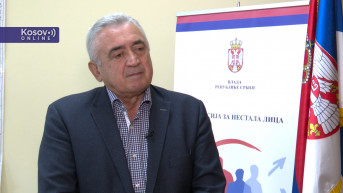
President of the Commission for Missing Persons, Veljko Odalovic, responded to claims by Andin Hoti from Pristina that Serbia is demanding that Kosovo be represented by UNMIK in the Joint Monitoring and Implementation of the Declaration on Missing Persons. Odalovic stated that the Kosovar side is trying in every possible way to block everything related to the Brussels dialogue, including the most sensitive issue—the issue of missing persons.
Odalovic emphasized that Serbia is adhering to the existing documents, rules, and framework of the Working Group, while Pristina is trying to place the issue of missing persons in a political context.
“I regret that such an important topic is being burdened with information that only troubles citizens and families, especially since none of this has actually happened. We have not submitted any document, nor have we requested that UNMIK represent them in leading this process. None of this is true,” said the head of Serbia’s Commission for Missing Persons for Kosovo in a statement for Kosovo Online.
He pointed out that Pristina does not want dialogue on any issue, which is also evident from the behavior of their delegations in Brussels.
He expressed hope that Hoti made his statement about Serbia’s demands at the urging of Kosovo’s Prime Minister Albin Kurti and that Hoti does not truly believe what he said.
“I would like to believe that he does not actually mean what he said. That what he said came either by instruction or from the mouth of Albin Kurti, because all of his arguments indicate that they do not want dialogue. They do not want dialogue in Brussels on any issue, not just this one. We have witnessed their behavior in Brussels, which frankly deserves no comment. If we haven’t been able to meet in Brussels on this issue for four years, despite meeting several times a year, it shows that they do not have good intentions,” Odalovic told Kosovo Online.
He noted that Pristina is attempting to turn the issue of missing persons, which is primarily humanitarian and civilizational, into a political matter, trying to accuse Serbia of obstruction.
“This latest interview or statement by Mr. Hoti, my colleague, who heads the working group just like I do, shows that they do not want to make this Working Group functional. We haven’t met for four years. There was one meeting in Geneva where we made a concession, as the meeting was supposed to take place in Pristina. They conditioned it by saying that the meeting couldn’t be held in Pristina if I attended, as I unfortunately still cannot enter the territory of Kosovo and Metohija. We held the meeting in Geneva, agreed on some matters, and began to work,” Odalovic said.
However, as Odalovic added, the last meeting in Brussels, within the dialogue framework, dismantled the process and exposed Pristina's true intentions.
The Declaration agreed upon by Serbian President Aleksandar Vucic and Kosovo Prime Minister Albin Kurti in Ohrid was supposed to serve as a guideline and bring new quality to the work of the Working Group, Odalovic noted.
"In this Declaration, the Working Group on Missing Persons was established under the mandate of the UN Secretary-General's Special Representative on March 16, 2005, and that has never been questioned, not even by a single word or comma. On the contrary, the plan was to form a joint commission in line with the Declaration, which would have its own working rules to support and assist the Working Group. This is something we all agreed on, believing that we would receive a document based on which we would work together through the Joint Commission and the Working Group. However, Pristina’s refusal to accept anything that would enable the Working Group to function, especially regarding Article 7, which fundamentally changed both the text of the Declaration and the working rules of the Joint Commission, revealed Pristina's intention not to activate this process," Odalovic pointed out.
He recalled that the Special Envoy for the Belgrade-Pristina dialogue, Miroslav Lajcak, made multiple attempts to find a solution and reach a common position so that both sides could continue to work and cooperate on the issue of missing persons.
Odalovic emphasized that both sides were given the text of an interpretive statement, as they had requested Lajcak to define Article 7, clarify what it entails, and make it binding for both Belgrade and Pristina.
"As far as we are concerned, the text that Lajcak, as a mediator, sent was absolutely acceptable to us, and we reiterated this at the meeting in Brussels on Thursday. We said that it was a good path and that we fully support it, believing that Pristina would accept it. There was nothing controversial or provocative in that text, nor was there anything that would drive Pristina away from the table," Odalovic stated.
According to him, Pristina did not accept the document, demanding the removal of a clause mentioning the Working Group, which continues its work as outlined in the Declaration and which was formed by UNMIK, i.e., the UN.
He stressed that this is something indisputable, given that the signatures of both the Pristina delegation representatives and the representatives of the International Committee of the Red Cross, which chairs the Working Group, and UNMIK representatives on behalf of the UN, are present.
The previous work of the Working Group under the existing conditions, he added, has yielded results.
"We have resolved more than 1,800 cases of missing persons through this mechanism, through this Working Group that was formed precisely with that mandate. Of those resolved cases, 80% clarify the fate of Kosovo Albanians. We believed we would continue with the support we needed, with more strength and the inclusion of new technologies, directions for searching archives, etc.," Odalovic explained.
However, as he said, Hoti’s statement shows that Pristina has fully exposed its intentions—not wanting the Working Group and rejecting the UN.
He warned that the issue of UN participation is not about whether "Pristina or Belgrade wants it," but rather it's up to the UN to decide.
The United Nations has its mandate, formed the Working Group, and it operates under their mandate, Odalovic noted.
"Never has anyone asked us for UNMIK or anyone else to manage the process. What is stated in the working rules we signed together is that a representative of UNMIK is one of the members of the Pristina delegation, just one of the members, with no significant role other than being present. All other operational roles are handled by the institutions we represent through the Belgrade or Pristina delegations, and that’s how it functions," he explained.
Everything Pristina claims today, Odalovic notes, disrupts the process of uncovering the fate of missing persons.
He expressed sorrow for the families of the missing, stating that Pristina is sabotaging their right to learn the truth about their loved ones.
“I feel sorry for the families. Pristina does not care about the families of either Kosovo Albanians or Kosovo Serbs. The messages they are sending show that they have no interest in this matter,” he stated.
On the other hand, Serbia, he emphasized, is concerned about the families of both missing Albanians and Serbs and is striving to resolve the issue of missing persons.
“We are fighting to keep this mechanism alive and to put it into function. We have dozens of locations that we have exchanged and need to search together, exactly as the working rules define, where both we and Pristina would be present, along with representatives of the International Committee of the Red Cross. We have had experts brought in by UNMIK, meaning people who were present, and EULEX sent its representatives as well. It was a transparent mission. We took the families of both Kosovo Albanians and Serbs to the locations. We have nothing to hide, nor have we ever avoided any issue,” Odalovic explained.
He added that he personally made sure to explain to the families of Kosovo Albanians that the problem is not in Belgrade, but that the Serbian side does not have a partner in Pristina willing to work together.
If the Serbian delegation cannot visit certain locations, even though the necessary documentation exists, it indicates that Pristina is unwilling to address Serbia’s requests, Odalovic observed.
On the other hand, he stressed that Serbia is completely open to cooperation, adding that the Novo Brdo site near Novi Pazar, where both sides are working together, is now being explored.
He assured that Serbia will continue to work as it has so far, regardless of what Pristina says or what positions they hold.
“We will insist that this mechanism continues to function because there is no alternative. This mechanism has allowed us to operate despite all challenges. In the 20 years since these working rules have been in place, there have been many reasons for both sides not to act responsibly. The level of responsibility remained intact until Albin Kurti came and changed his policy toward this process and his attitude toward the most sensitive issue. He simply does not care,” Odalovic assessed.
He reiterated that Hoti’s statement is a political declaration, a manifesto, and a message.
He expressed regret that Hoti is making statements under “the pressure of Pristina’s politics,” even though he himself is a victim, as his father is listed as missing.
“I deeply regret his words because he is the most direct victim in this situation. We have made tremendous efforts to obtain information about his father, who went missing. We did not prioritize his case over others, but we treated it the way every victim’s case deserves to be treated. That is our approach to everyone. I wouldn’t be surprised if this statement came from Besnik Bislimi or Albin Kurti. They shouldn’t use Hoti for this. He’s a man who, I believe, doesn’t truly believe in what he said, and who knows that this is not the right path. But evidently, someone has to say it because that’s the political line currently being pursued in Pristina, led by Albin Kurti,” Odalovic conveyed.
He noted that the Serbian side comes to Brussels prepared and responsible, and it is “devastating” that Pristina does not want to talk.
Moreover, he said it’s equally devastating that no measures have been taken so far against those who are blocking the dialogue, being uncooperative, and hindering efforts on the issue of missing persons.
“This is the worst thing they could have done because they’ve sent a message to the families that we’re entering a space where no solution or improvement, which families expect, is in sight. I will remain committed to the working rules, the general framework, the signed documents, respecting the Declaration agreed upon by Vucic and Kurti, and continuing to work on improving the working rules for the joint commission, believing that this is just a temporary episode from Pristina and not a permanent stance. I hope they will realize that what they said is not true. I regret that they are burdening such a sensitive topic with misinformation that troubles citizens and families, especially since none of this has happened. We have not submitted any document, nor have we asked for UNMIK to lead the process on their behalf. None of that is true. We have only requested that the Working Group remain as outlined in the Declaration, and that we continue to work together through this joint commission under the agreed-upon measures to achieve better results,” Odalovic concluded.
Serbia's position is based on existing documents, and if Pristina has new proposals for a new document, they are welcome to present them to clarify their intentions, Odalovic added.
“This approach through the media is not good,” Odalovic concluded.
Nevertheless, he pointed out that Pristina does not have the power to completely block the process of searching for missing persons in Kosovo, unless, as he said, UNMIK and EULEX "bury their heads in the sand" and allow Kurti to continue "doing what he's doing."
Odalovic reiterated that the Serbian delegation will continue to invite the Pristina side to the locations and respond to all requests, but moving forward, they will be much more cautious.
“This is the moment to send them a message that they need to be much more specific when they have requests, rather than just mentioning them casually and leading us to locations without proper identification. From now on, they will have to put in much more effort and provide us with precise information. I have no intention of wasting Serbia’s human or material resources on their empty talk and on rumors they’ve heard in cafes or markets. That won’t work anymore. Now is the time to be more efficient,” Odalovic emphasized.
Albin Kurti, he noted, is pursuing a policy aimed at blocking everything that happens in Brussels, including the most sensitive issue of the missing persons.
“They can say they don’t want UNMIK to remain there, they can say they don’t want EULEX there. They can say whatever they want, and that’s their stance, but that’s politics. We are trying to take this out of politics, to work, go into the field, find locations and bodies, return them to their families, and allow them to find peace, but under these conditions, I don’t know what to say,” Odalovic concluded.

0 comments