
Odalovic: It's time for Kurti to unblock the process of resolving the issue of missing persons
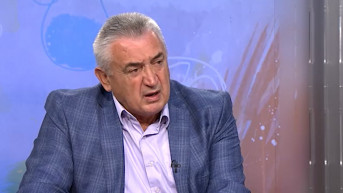
The main topic of the new round of dialogue between Belgrade and Pristina in Brussels, which outlines the path of implementation of previously concluded agreements, should be the Declaration on the missing persons during the conflict in Kosovo, and the head of the Commission on Missing Persons of the Government of Serbia, Veljko Odalovic, hopes that this document will be adopted, as reported by BBC Serbia.
"Families have the right to be restored to peace, to find out the fate of their loved ones, to have the opportunity to bury them with dignity, and for all those who committed crimes to be prosecuted," Odalovic emphasizes.
Therefore, he hopes that the agreed text of the Declaration will be adopted in Brussels.
"It is very important to come up with such a document, to return to the process, to continue working and continue contacts first with the families and to give them hope. This is the most important thing because hope is lost for them, for Albanians and Serbs who are looking for their loved ones. The agreement has a political dimension, but this is not political, but a humanitarian issue," Odalovic says.
He emphasizes that Pristina is responsible for the process of finding missing persons being stopped.
"It is important for Albin Kurti to free the topic he blocked two years ago by accepting this document that brings a new quality so that we can start dealing with the humanitarian issue as we have done so far. We have solved more than 1,800 cases of missing persons in this mandate, of which 90 percent were Kosovo Albanians," Odalovic says, describing the period from 2006 to 2021.
As he explains, the process was "blocked" then.
"It is the hardest for families who are lost in time and space; wherever they turn, they hit a wall because nothing works," Odalovic emphasizes.
According to Odalovic, a new quality in this process could be the formation of a joint commission that will include representatives from Belgrade and Pristina, as well as international organizations such as the Red Cross and the International Commission on Missing Persons.
"A joint working group could help us a lot because it would allow us, both Belgrade and Pristina, to delve deeper into the archives of international organizations and solve issues that we haven't been able to solve so far. The vast archival material that was in the possession of international organizations has largely been inaccessible to us and Pristina," Odalovic said.
During the negotiations on the Declaration, the wording "enforced disappearances" was a contentious issue for a long time, which Pristina insisted on and Belgrade refused to accept.
According to Odalovic, the term "enforced" is not in the text, and a technical agreement has been reached by both sides, which is expected to be confirmed by the highest political level.
0 comments