
Pavkovic: Abolishing the veto right in the EU would benefit Kosovo, but member states are unlikely to agree on that
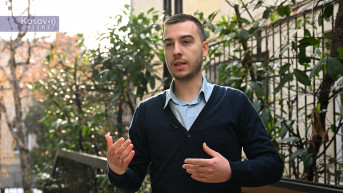
A possible change in the voting method in the European Union, where decisions on foreign policy and enlargement would no longer be made unanimously but by a qualified majority or overruling, could be in favor of Kosovo, which is currently not recognized by five EU member states, a researcher at the Center for European Policy, Milos Pavkovic says, however, he also adds that such reforms in the functioning of Brussels will be a long and arduous process, given that member states will find it difficult to give up the veto right.
Pavkovic recalls for Kosovo Online that the topic of changing the founding treaties of the EU has been relevant for the past year and a half and that the European Parliament has adopted a resolution calling for the initiation of a convention to amend the Union's treaties. He adds that one of the key points in many discussions is the expansion of areas in which, instead of unanimity by consensus of all 27 member states, qualified majority voting would be used in the EU.
This issue was particularly highlighted after the last European Council summit and Hungary's veto on additional financial aid to Ukraine. Pavkovic believes that the topic of introducing qualified majority voting will remain relevant in 2024.
"When we talk about introducing a qualified majority in EU enlargement policy, that is also an item on the agenda, considering that so far decisions in enlargement policy have been made exclusively unanimously. That is why Kosovo's candidacy for EU membership, submitted in December of last year, has not yet been on the agenda of the European Council. It has not come to a vote precisely because of the opposition of five member states that do not recognize Kosovo. Moreover, Spain, which does not recognize Kosovo, chaired the Council during the past period, and in the coming period, it will be Belgium, which will be busy organizing elections for the European Parliament and discussing changes to the decision-making process in the EU itself. So, the prospect of deciding on Kosovo in the short term is not realistic", Pavkovic believes.
He emphasizes that proposals to introduce qualified majority voting in EU foreign and security policy, as well as in enlargement policy, are certainly something that pleases the government in Pristina. Primarily, in that case, there would no longer be a veto right for the five member states that do not recognize Kosovo, so it would be possible to override both the candidacy and future membership of Pristina in the EU.
He points out that even in the current procedure in areas where qualified majority voting is applied, there is a so-called blocking minority. In other words, a minimum of four states representing at least 35 percent of the EU population can block decisions made by a qualified majority.
"In the case of voting on Kosovo, if the decision-making system were to change, the five member states that do not recognize it would not be able to block such a decision with a so-called blocking minority. So, more states would need to oppose it", our interlocutor explains.
Regarding Pristina's call for Kosovo to be granted candidate status for the EU, Pavkovic says that things will not go smoothly there either.
"The candidacy of Kosovo for EU membership is very specific because it has an undefined status. The EU has a so-called policy of neutrality towards Kosovo. The EU, as an organization, does not recognize Kosovo as a state. According to the EU Treaty, it says that 'a European state can become a member'. Following this article, the EU should not approve Kosovo's candidacy. However, considering the negotiations on the normalization of relations and especially the Ohrid Agreement, which opens the door for Kosovo's membership in all international organizations, Kosovo's candidacy should be viewed in that context", he notes.
He emphasizes that from this perspective, one should not expect a quick decision from the EU regarding Kosovo's European future.
"There are slim chances that Kosovo will receive candidate status for EU membership in the short term. I believe the EU strategy will be to postpone the vote and decision on candidacy until the agreements from the dialogue are implemented. Only after that, as a reward for implementation, potential voting may occur. However, that is in the medium or long term. In the short term, I do not expect Kosovo to get the green light for candidate status", Pavkovic says.
When asked about the realism of reforming EU voting procedures, as consensus from all 27 member states was required for such changes, Pavkovic says that countries would find it very difficult to decide on something like that—to agree to relinquish the veto right in EU policies where they currently have it.
"Negotiations on changing the decision-making methods and founding treaties, if they happen at all, will be very lengthy and arduous. It should not be expected that this process will happen overnight. It will be the subject of intense discussions among member states, and it currently seems very challenging for states to easily give up the veto right they possess", Pavkovic emphasizes.


0 comments