
Samardzic: Reform of the EU decision-making system almost impossible; Kosovo will hardly reach candidate status
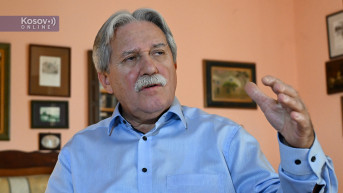
Slobodan Samardzic, a professor at the Faculty of Political Sciences, states that it is almost impossible for the European Union to undergo a reform that would involve changing the decision-making system, and this change would mean that key decisions on foreign and enlargement policy issues would be made by a qualified majority rather than the consensus of all 27 member states. He points out that Kosovo is unlikely to attain candidate status for EU membership due to five Union states that do not recognize its independence.
Samardzic says for Kosovo Online that the EU has had many problems with its functioning in the last 15 years, and the discussion about reforms in the decision-making system, which has been recently brought up again, dates back to the past. He emphasizes that the Founding Treaty of the EU, which is still valid today, was adopted in 2009 and has become outdated, especially during times of crisis and how it was resolved.
"They are now considering changing the treaty in the area of decision-making, primarily for common foreign, security, and defense policy. They have a big problem with the decision-making process, where unanimity is required for key decisions and a qualified majority for so-called actions based on a decision made by consensus. The Union is indeed complicated, preventing its effectiveness in foreign, security, and defense policies. Since that has become the most important policy of the EU, to its great detriment, they are simply looking for a more efficient decision-making method," Samardzic says, adding that in this matter, the EU does not have independence but depends on the policies of the United States and NATO.
The process of changing the decision-making procedure is very complicated and requires an amendment to the Founding Treaty of the EU, he notes. He reminds that such changes were made between 1987 and 2009 at least five times. At that time, he adds, there was a basic consensus for changes, and they were relatively easy to make, although the procedure involves an intergovernmental conference lasting at least a year. The European Council convenes it, and the General Affairs Council conducts it, including all organs, organizations, institutes, and public opinion, and only then is a decision on the change made.
"This treaty adopted in 2009 seems as if it is set in stone. They are afraid to initiate the change process because they do not have a consensus on many things, especially on foreign, security, and defense policies. This is a story that has been going on for a long time and has intensified recently, but it has no effect. They won't achieve consensus for a very long time, as they have more important matters, and this has been imposed by the United States and NATO as an important topic due to the war between Russia and Ukraine. The EU has a problem functioning even in vital areas such as the economy, energy, etc.It is a system in deep crisis, hard to overcome because they are slow to decide on changes, as changes imply the consensus of 27 member states. It is almost impossible," Samardzic is convinced.
Regarding decisions related to Kosovo, Samardzic points out that a consensus of all 27 member states is required.
"Five member states are in the non-recognition status of Kosovo. Only one of them, especially five, can stop some important decisions. But they don't do that, in order to avoid internal conflicts over these matters. But if decisions were made on very important topics, such as opening accession negotiations for the so-called Kosovo with the EU, there would have to be a consensus. This agreement leading to that must be signed not only by Brussels and the aspiring country but also by all 27 member states. They would never reach consensus on that, and it would block things," Samardzic believes.
According to him, the EU's policy toward Kosovo is a policy that does not pay much attention to legal rules, especially international law. He reminds that EULEX, representing the EU in Kosovo, was responsible for the rule of law, but they did nothing, and they are now present as observers.
"The EU's policy in Kosovo has completely failed, especially in the economic sphere, because, according to Resolution 1244, the EU had the task of rebuilding Kosovo. However, Kosovo has not been economically rebuilt; it is the poorest region in Europe, where the population is moving and living solely on subsidies from abroad and wrong trade policies and processes, such as human trafficking, drug smuggling, and weapons. So, the Union is not doing well there, and it lacks the strength to reform from within," he notes.
When asked about the chances of Kosovo obtaining candidate status for the EU, considering that five member states do not recognize it, and what a potential change in the decision-making process within the Union would mean in this context, Samardzic pointed out:
"In the case of Kosovo, candidate status cannot be granted because of these states that do not recognize Kosovo, as the Stabilization and Association Agreement would have to be signed with all of them. Admittedly, it exists; it was signed with Kosovo by the EU five or six years ago, but it is not identical to the documents that the EU has with Serbia, North Macedonia, or Montenegro, previously with Poland, the Czech Republic, and others. In the case of Kosovo, it has special chapters that relate to a specific case and do not, for example, concern political cooperation. Only under those conditions have five countries allowed that signature. It is a quasi-accession agreement, and it would probably be the same for candidacy, with some serious reservations from these countries," Samardzic emphasizes.
According to him, all of this can distract the attention of the public that "cannot wait for happiness and a good life in a free and prosperous Europe, but factually it does not move things forward at all."
"If America orders, Kosovo can get candidate status; that is the EU's position. If NATO says we need it for our global goals, it can happen. But then it is no longer the European Union," Samardzic concludes.


0 comments