
Pavkovic: Both Belgrade and Pristina expect changes in the conduct of the dialogue, but opposite ones

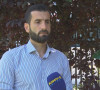
Milos Pavkovic from the Center for European Policy told Kosovo Online that both Belgrade and Pristina expect changes in the position of mediator in the dialogue, as well as in the way the dialogue will be conducted, but that the two sides have "diametrically opposed views."
Although Borut Pahor said that he had been promised Lajcak's position and that he doesn't know what has changed in the meantime, Pavkovic emphasizes that there are no promised positions in politics.
"What has changed is that we had elections for the European Parliament, and we will, during the fall, or rather these days, get a new/old President of the European Commission and thus a new Brussels administration. There will likely be some changes since positions in the EC are allocated based on political agreements," Pavkovic says.
"Besides that, what is also interesting about Pahor is that a few years ago, while he was President of Slovenia, there was the Slovenian non-paper from which everyone distanced themselves, which in some version mentioned the exchange of territories. That paper was not well received at all, and everyone in the EU, even in Slovenia, eventually distanced themselves from it, which now might be more of a burden to Pahor than an advantage," Pavkovic says.
He believes that a certain personality in the mediator position can influence the initiation of dialogue, but that at this moment, geopolitical changes have a decisive influence on progress in the dialogue.
"Therefore, regardless of who is in that position, they can be successful or not, depending on geopolitical changes, but also depending on the readiness of the European Union and its individual member states, as well as the USA, to support the agreement and to put pressure on both sides to move forward concretely regarding the agreement. Because we have seen that Lajcak, although he has extensive experience, having been in the region, in Bosnia and Herzegovina, in Serbia, and as an ambassador, meaning he knows the region well and has theoretically good methods for conducting dialogue, essentially did not result in significant progress. Although we had the agreement on the path to normalization, it has not yet been technically implemented, and there is still a big question mark over that agreement," the interlocutor assesses and adds that the lack of results during Lajcak's mandate was also influenced by the relatively passive role of the USA.
He also states that both Belgrade and Pristina expect changes in both the personality and the way the dialogue will be conducted, but that "both sides have diametrically opposed views."
"Both sides expect that in the autumn, in November or December, when the dust settles around the European elections and a new European Commission is formed and when the US elections are over, the individuals who will come to high political positions in Brussels and Washington will better align with their interests. Therefore, Belgrade looks to Washington and Donald Trump, while Pristina looks to Brussels and Kaja Kallas, with whom they already have a good relationship and expect someone favorable for them," Pavkovic says.
He reminds that Kurti and the government in Pristina believed that Lajcak was not neutral and that he supported Serbia more in the dialogue because he comes from a country that does not recognize the independence of Kosovo.
"Therefore, they will expect Kaja Kallas, as a traditional friend of Kosovo, to appoint someone who comes primarily from a country that has recognized the independence of Kosovo and who will look favorably on the government in Pristina and all the moves it makes. So, both Belgrade and Pristina eagerly await the end of the year and the appointment of new individuals, hoping to gain a better position in the further dialogue," he concludes.


comments