
Pavkovic: Brussels aims to halt Pristina’s unilateral moves, but EU mechanisms are ineffective
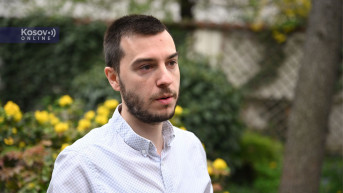
Strategic Director of the Center for European Policies, Milos Pavkovic, stated that Brussels’ goal is to stop Pristina’s unilateral actions and move toward the implementation of what has already been agreed upon — primarily the establishment of the Community of Serb-majority Municipalities — but that European Union mechanisms have so far failed to produce significant results, RTS reported.
European Commissioner for Enlargement Marta Kos visited Pristina yesterday, where she said that constructive engagement in the dialogue with Serbia was necessary on Kosovo’s path toward the European Union.
Pavkovic recalled that Pristina submitted its application for candidate status for membership in the European Union back in 2022, but that the application has not been seriously considered to date.
“It seems to me that there is a diplomatic initiative by Pristina to reactivate its candidacy. In that context, Marta Kos is trying to encourage the implementation of the agreements reached in the normalization dialogue, as well as broader reform processes in Pristina,” Pavkovic told RTS.
According to him, Brussels’ objective is to stop Pristina’s unilateral actions and begin implementing what was agreed long ago — above all, the establishment of the Community of Serb-majority Municipalities.
Nevertheless, he added that he is not certain how much this visit will actually lead to concrete progress regarding the position of the Serbian community in Kosovo.
Speaking about Pristina’s unilateral actions, Pavkovic recalled the abolition of the dinar, the deployment of special police units, the organization of what he described as illegitimate elections, as well as the closure of Serbian institutions.
“Of the Serbian institutions, practically only those within the healthcare and education systems remain. That is a red line both for Serbia and for the European Union,” Pavkovic emphasized.
As he explained, Brussels’ message is clear — those institutions must not become the target of unilateral actions, but instead must form part of a broader agreement within the normalization process.
Pavkovic, however, pointed out that EU mechanisms have thus far not proven sufficiently effective.
“Pristina carried out unilateral actions even while restrictive measures imposed by the European Union were in force. Those measures led neither to the implementation of existing agreements nor to the conclusion of new ones,” Pavkovic said.
He added that it therefore remains a major question to what extent Brussels will succeed in influencing a change in the behavior of the authorities in Pristina in the future.
Commenting on the conditions set by Albin Kurti for the continuation of the dialogue, Pavkovic assessed that they represent an attempt to delay the implementation of the agreements.
According to his assessment, these are conditions that are practically impossible to fulfill and serve as a pretext to avoid the establishment of the Community of Serb-majority Municipalities.
He also stressed that Marta Kos spoke very cautiously about Pristina’s European integration prospects.
“She did not directly mention candidate status, but rather rapprochement with the European Union. That is not accidental, because candidacy would require unanimous approval by all member states, and five EU member states do not recognize Kosovo,” Pavkovic noted.
Asked whether Marta Kos’s visit could also be interpreted as a signal that Brussels is prepared for a new political interlocutor in Pristina after the elections, Pavkovic said he does not believe that was the primary motive.
“I believe the visit was primarily aimed at trying to revive the process of normalization of relations with Belgrade and unblock reform processes,” Pavkovic stated.
Still, he added that Brussels expects stable institutions after the elections so that Pristina can even be considered a relevant interlocutor for the European Union.
0 comments