
Pavkovic: A new balance of power is emerging globally, Western Balkans not on the agenda for world leaders in New York
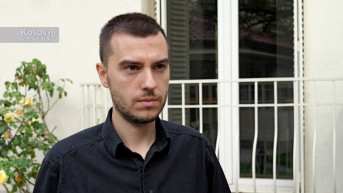
Milos Pavkovic, Strategic Director at the Center for European Policies, stated that the 80th session of the UN General Assembly showed that a “new balance of power” is emerging at the global level. At the same time, although the Western Balkans was not a topic for the world’s leading figures, he highlighted the speech of Serbian President Aleksandar Vucic, while explaining the many criticisms of the Kosovo delegation’s activities by analysts in Pristina as part of the “dynamics of internal relations in Kosovo.”
“A new balance of power is emerging globally. Power is shifting toward the global East and South. There were also evident criticisms of the UN’s activity coming from several sides, and these were the key messages we could hear at this landmark 80th session of the General Assembly,” Pavkovic told Kosovo Online.
Commenting on developments both in the session itself and on its sidelines, Pavkovic stressed that the key event was the recognition of Palestine by several important Western states, but with the “evident absence of the US.”
“This is the largest wave of recognition of a state since 2008 and the case of Kosovo’s self-declaration,” Pavkovic noted.
He added that the positions expressed by US President Donald Trump, criticizing migration and “green policies”, were somewhat expected, but still surprising.
“What came as a major surprise was the speech by Chinese President Xi Jinping, who was not physically present in the hall but spoke via video message, where he clearly emphasized China’s ambition to become a leader in environmental protection and the ‘green transition’, which was somewhat unexpected,” Pavkovic said.
He added that the session was marked by discussions and attempts to find answers regarding the conflict in Ukraine as well as the issue of Israel and Palestine.
“Those were the topics deeply addressed in various speeches,” the analyst specified.
Commenting on the participation of the Western Balkans at this year’s UNGA session, Pavkovic said the topic was absent from the speeches of the world’s most important leaders.
“What was certainly interesting was the speech of the Serbian president, who referred to Belgrade and Serbia not as a ‘buffer zone’ but as a bridge for future negotiations on various armed conflicts, as well as, of course, the issue of Kosovo and Metohija and the importance of the territorial integrity and sovereignty of member states. Those were the key points he raised, tying them to the ongoing global political crises,” Pavkovic said.
Albanian analysts largely criticized the performance of Kosovo’s president Vjosa Osmani and foreign minister Donika Gervalla-Schwarz, which Pavkovic explained as stemming from the “dynamics of internal relations in Kosovo.”
“We see there is no government, there is a serious political and constitutional crisis. When we take into account that the President of Kosovo and the Foreign Minister do not belong to the same political groups, it becomes clearer why the relations are such and why there is a lack of coordination,” Pavkovic said.
He added that one must also consider the relationship of Western states toward the government in Pristina.
“A very low level of relations has been established with the most important Western partners during Gervalla-Schwarz’s mandate, so it seems there is a tendency on the part of President Osmani to distance herself from the Self-Determination Movement and Gervalla-Schwarz in order to preserve her own credibility,” Pavkovic concluded.
0 comments