
Vujinovic: General Assembly showed that the UN is no longer an institution for negotiations
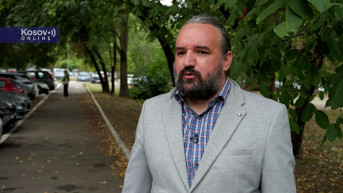
Security studies researcher Nikola Vujinovic assessed that the 80th session of the UN General Assembly in New York showed that this institution is no longer a place for negotiations. At the same time, he pointed out that meetings on the sidelines of the session, especially the meeting of foreign ministers within the “Friends of the Western Balkans” forum, were “a sign that there is still room for dialogue.”
“The UN General Assembly session highlighted two key things. The first was something of historic significance: the recognition of Palestine by the United Kingdom and France. With that, four out of the five great powers, the permanent members of the UN Security Council, have become supporters of Palestine and the two-state solution. The second is something that was left unsaid, but it became clear from the start of the General Assembly: unfortunately, the UN is no longer an institution for negotiations. The great powers can do whatever they want, and there is no framework that can prevent them from doing so,” Vujinovic told Kosovo Online.
He added that a major surprise was the fact that US President Donald Trump “once again changed his rhetoric.”
“True, the policy itself hasn’t changed yet, but the rhetoric has. Just a few days ago, Ukraine was said to be on the verge of disappearing, and now it seems Russia is on the verge of disappearing. Once again, it shows that Trump and the administration he leads don’t really understand international politics and diplomacy as they should,” Vujinovic observed.
On the sidelines of the UN General Assembly, a meeting was held between Western Balkan foreign ministers and the foreign ministers of the “Friends of the Western Balkans” group.
Vujinovic stressed that this was “a good sign.”
“I’m glad that the Friends of the Western Balkans forum was held on the sidelines of the session, although I don’t think Donika Gervalla should have been there as a representative of an unrecognized state. Still, it is good that such forums are held, because that’s a sign there is still room for dialogue. In other words, we haven’t yet crossed into conflict,” Vujinovic emphasized.
Assessing the participation of Western Balkan representatives at this year’s General Assembly session, Vujinovic noted that there were several “categories” of how they presented themselves.
“We had Serbia’s participation, which I would say went excellently. The meeting with Rubio is the best proof of that. There was also a series of bilateral meetings, as well as President Vucic’s speech, which resonated through the General Assembly. And unfortunately, we had other examples, such as Kosovo’s ‘state-likeness’ through Vjosa Osmani, which showed what it looks like when you are an unwanted tourist in New York. We witnessed that she had to sneak in just to enter the UN,” Vujinovic said.
He added that apart from Serbia’s representatives, Balkan leaders generally had a less visible role.
“We had Zoran Milanovic, who wants to recognize Palestine, while Croatia as a republic does not. North Macedonia – silence. Montenegro wasn’t even ‘visible,’” the analyst noted.


0 comments