
Pavkovic: The struggle for the PM position hampers the Kosovo opposition coalition from the start
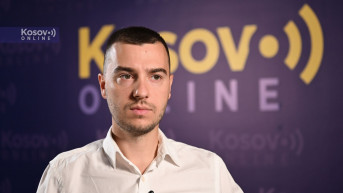
Milos Pavkovic, associate of the European Policy Centre from Belgrade, assessed that the struggle for the position of prime minister would be a key point of contention in any potential opposition coalition seeking to form a new government in Kosovo.
“This comes down to the internal relations between the leaders of the three parties, and whether the question of who would be prime minister would arise. That question could potentially derail the negotiations from the very beginning, as both the PDK and LDK have ambitions to claim the prime ministerial position, which in itself complicates any coalition agreement. Whether they will prioritize the common goal of removing Kurti and Self-Determination over personal ambitions remains to be seen. But if personal ambitions take precedence, it will be difficult for the opposition to muster the strength to form a government,” Pavkovic said for Kosovo Online.
He explained that both Self-Determination and the opposition parties could, in theory, secure a parliamentary majority with the help of minority communities, but regardless of whether they succeed, any government formed from such a coalition would be “prone to collapse.”
“The math is clear. Self-Determination holds 48 seats, while the three largest opposition parties — PDK, LDK, and AAK-Nisma — together have 54. So they need that ‘magic’ number of 61. One option is to win over ten minority votes, but not from the Serb List — rather from the ten minority seats of other national communities such as Bosniaks, Roma, Ashkali, and Egyptians. With those ten votes, the opposition could theoretically reach 64 seats in parliament — meaning they could form a government without the Serb List,” Pavkovic told Kosovo Online.
However, he emphasized that numbers and statistics are one thing — reality is another.
“We’ve already seen how difficult it is for Kurti to secure minority votes, and it will be even harder for the opposition, especially since we’re talking about a coalition of three or even four parties, plus minority parties. That would certainly be a very unstable government, just as a potential Kurti-led government with minority support would be. In political theory, this would be considered a ‘minimal government’ with 61, 62, or 63 votes — one that would be vulnerable to collapse,” Pavkovic noted.
The first challenge for such a government, regardless of who forms it, will be the upcoming election of Kosovo’s president in parliament.
“That election is scheduled for early 2026, and it will be a serious test for the government, whoever forms it,” Pavkovic concluded.


0 comments