
Mijacic: Kosovo faces an institutional crisis with no easy exit, elections are the most likely option
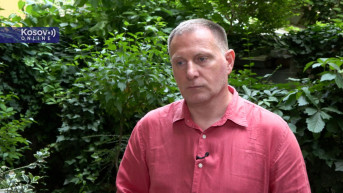
Dragisa Mijacic, Coordinator of the Working Group of the National Convention on the EU for Chapter 35, stated that despite announcements by some opposition parties that they might be able to form a parliamentary majority, the more realistic option is holding new elections, as Kosovo is facing an institutional crisis with no straightforward solution.
“If the opposition parties have enough votes to form a government, I believe they would also have enough votes to form the parliament. Kosovo has entered an institutional crisis from which there is no easy way out. This is not only about electing the Speaker of the Assembly, but about forming an entirely new parliamentary majority. It seems more likely that new elections will be held than that political parties will reach an agreement to form a government,” Mijacic said in an interview for Kosovo Online.
He said the only remaining question is whether these extraordinary elections would be organized together with the local elections—or earlier or later.
“Every decision will bring its own challenges, but time will tell. I believe that under the current circumstances, it is very difficult to form institutions—first the Assembly, and later the government,” he emphasized.
Commenting on the potential cooperation between the PDK and LDK, Mijacic reminded that such a coalition has existed before, but a “repeat” would not be successful, primarily because Albin Kurti’s party would represent a “strong opposition.”
“That would bring additional political instability to Kosovo. Kurti didn’t win a majority in the elections, but he did receive the most votes. He would be a strong opposition force, and I believe such a government wouldn’t last long. Essentially, everything is also on hold until the presidential election in March of next year. That is a major part of the political calculus,” Mijacic said.
He sees the key problem in the fact that no party currently has sufficient “coalition potential.”
“Kurti, who convinced himself he could rule alone, can no longer do so—at least not without the help of minority parties, which would only bring him to the bare minimum of 61 votes. That doesn’t provide the stability he had in the previous period, and he is very reluctant to give up that stability and his unilateral style of governance. For the past four years, he governed with full autonomy. On the other hand, the opposition parties don’t have enough votes to ensure societal stability in Kosovo,” Mijacic stressed.
Therefore, he reiterated, the solutions are either new elections or, eventually, the involvement of the United States in the process.
“They will shape the government in a way that best suits their interests,” he stated.
Asked how realistic it is to expect the formation of a “government of national unity,” Mijacic expressed skepticism.
“I don’t think it is realistic. A government of national unity already existed during the UNMIK mandate, and it didn’t work. I don’t believe that could be a viable option,” Mijacic concluded.



0 comments