
Mazreku: Kosovo’s political class focused on minor, not key issues
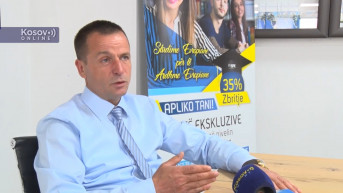
Avni Mazreku, a professor of European law from Pristina, stated that the current course of the constitutive session of the Kosovo parliament demonstrates that both the ruling and opposition parties are only capable of dealing with “minor political issues,” rather than the crucial ones such as EU membership or joining NATO.
“I don’t think anything like what is happening in Kosovo has ever occurred in the history of parliamentary politics worldwide. They are not considering the interest of the state, which is the establishment of institutions. The capacity of this political class is limited to dealing with very small political issues. This raises the question: what is their approach to other problems—Kosovo’s EU membership, the issue of recognition by the five EU member states, NATO accession, and other global matters that are far more important to Kosovo than the debates in parliament,” Mazreku told Kosovo Online.
Commenting on the Democratic League of Kosovo’s (LDK) idea of forming a “government of national unity,” Mazreku emphasized that the most optimal solution for overcoming the political crisis would be to form a broader coalition that also includes the majority party, Vetëvendosje (Self-Determination Movement).
“But that idea has failed. In this case, the opposition is right. We should not condition each other through blockades because that damages Kosovo’s interest, which is the formation of a stable government,” he stressed.
Mazreku considers the current process of constituting parliament harmful, placing blame on both the winning party and the opposition.
He criticized Self-Determination for insisting on Albulena Haxhiu as the new Speaker of the Assembly, and the opposition for insisting that her candidacy should not be voted on.
“These parties have brought Kosovo to a point where they are trying to resolve a problem that, in my opinion, doesn’t even exist. There are no political arguments for it, because the Speaker of the Assembly has no executive powers, but should serve as a unifying figure ensuring the smooth functioning of parliamentary sessions. I might have understood if the insistence was about forming a governing coalition,” Mazreku said.
He added that, although he does not understand why Albin Kurti, leader of Self-Determination, insists on Haxhiu’s election, if he were in politics, he would unconditionally vote for the candidate proposed by the largest party.
“Meanwhile, Kosovo’s political class is behaving as if there are no political problems in the country,” Mazreku remarked.
Asked why neither Self-Determination nor the opposition parties consider a possible coalition with the Serb List, especially given that acting Prime Minister Albin Kurti has stated that the Serb List should have been banned, Mazreku responded that the Serb List is a valid political party in Kosovo that participated in elections.
“If we refer to Radoicic or any other senior official of the Serb List, it’s not as if there haven’t been cases in other parties where leaders were involved in illegal activities,” Mazreku emphasized.
He argued that it is necessary to distinguish between the criminal responsibility of Radoicic and the political role of the Serb List.
“Kosovo’s interest lies in taking steps toward integrating those who are still not constructive participants in its constitutional and legal system,” Mazreku concluded.


0 comments