
Pavlovic: The key thing Kurti did not mention in his message to Serbs is freedom from fear
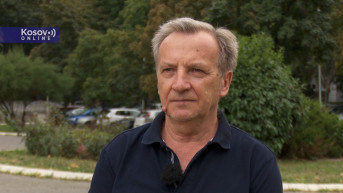
Historian Momcilo Pavlovic told Kosovo Online that the message Albin Kurti recently addressed in Serbian to the Serbs in Kosovo was not reassuring, and that it implied they are no longer even a minority, but an ethnic community that must integrate into Kosovo’s laws, stop relying on support from Serbia, and refrain from allowing Serbs who represent Serbian interests to participate in elections. The key thing Kurti did not say, according to Pavlovic, is “freedom for the Serbs – freedom from fear.”
In that sense, he recalls secret lists, arrests of Serbs over badges, inscriptions on T-shirts in Serbian or English, unlawful detentions lasting several months, and baseless court rulings.
Serbs, he stressed, should expect a continuation of this persistent provocative policy, and Kurti has also conveyed that he enjoys the support of the international community.
“They should also expect continued attempts, by every possible means, with visible support from Western countries, especially those stationed in Kosovo, to fully round off and cement Kosovo’s statehood, but without Serbs, or with Serbs reduced to some insignificant percentage without any role,” Pavlovic warned.
Regarding Kurti’s figures of 138 houses built and 13 renovated, Pavlovic says that Serbian property in Kosovo and Metohija has, under Kurti, been completely usurped.
“It would have been ideal if Kurti, in that address in Serbian, had spoken words of reconciliation and presented a plan for the unconditional mass return of Serbs to their homes – and then those Serbs, of course, assuming economic conditions for life were created, could return. The people expelled in 1999 and afterwards are now already of advanced age. The younger generations will hardly return,” Pavlovic remarked.
He points out that Kurti claimed that Kosovo and Metohija is among the leaders in Europe in terms of annual GDP growth, six percent, but failed to mention that this entity survives on American and German ‘life support’ through large donations.
According to Pavlovic, while Kurti speaks about dual or parallel institutions, he does not mention “that Kosovo itself is a parallel state structure, a parastate.”
Historically speaking, Pavlovic notes, it was the communists who first gave Kosovo territorial status, defined its borders, and granted it first regional and later provincial autonomy.
“Both Serbs and Albanians, not only under the communists but even before, of course, with occasional incidents as everywhere, lived side by side. There were problems, but essentially life went on. And now we come to the point where two of the three pillars of Serbian existence or identity in Kosovo – the church, education/language, and healthcare – are being integrated into some sort of Kosovo institutions or laws,” the historian noted.
He argues it is unrealistic for Serbs in Kosovo to be educated in another language, especially at lower levels, recalling that under Ibrahim Rugova, Albanians established a completely parallel education system from elementary schools to universities.
“They studied in basements, garages, madrasas, mosques… It was only Milosevic, with the help of Rome, who managed to somehow regulate the issue. Therefore, without the consent of the Serbs, this will just be another imposed norm. The West, which constantly laments, will make statements of regret, but the reality is quite different. This must be a process and a voluntary act of the Serbian people, whether they want to study under some programs designed who knows where, and then, for example, in history, Serbian children will be taught that Serbia committed aggression against Kosovo, that KLA representatives are freedom fighters, that their representatives are heroes, and that they must mark certain dates or attend memorial sites,” Pavlovic warned.
Education in their own language, he stressed, is a legacy of the 19th century, and Serbs had it even in the Ottoman Empire, including the Prizren Seminary, and schools in Pristina, Skopje, and Tetovo, which at that time were part of the Ottoman Empire.
“All in all, this is not a reassuring message. It is a message for his own electorate and for some Serbs who, understandably, as time goes on and out of life’s necessities, find it fitting to cooperate with Albin Kurti’s regime,” Pavlovic concluded.
As a reminder, on September 18, Kurti addressed the Serbs in Kosovo in a video message in which he said, among other things, that he wanted the best possible cooperation with the Serbian community and that the dualism of the healthcare and education system was unsustainable, stressing the need for incorporation.


0 comments