
Perisic: Kallas will not lead a favorable policy toward Serbia
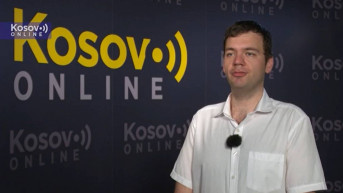
Nikola Perisic, an associate at the Center for Social Research, assesses that the election of the former Estonian Prime Minister Kaja Kallas as the new head of European diplomacy is very questionable for Serbia due to the fact that she comes from a country whose stance on the recognition of Kosovo is unequivocal.
"This is questionable, especially since she comes from a state that is very anti-Russian. These states often, mostly without reason, perceive Serbia as a country that is close to Russia, and therefore they have a priori a negative stance toward everything Serbia proposes and the various interests Serbia has. This is another complicating factor at this moment, and one should not expect that she will lead a favorable policy toward Serbia," Perisic emphasized in an interview with Kosovo Online.
He notes that in the selection of European officials dealing with specific issues, such as the dialogue between Belgrade and Pristina, their experience and knowledge of the problem's genesis are crucial.
"It is necessary for them to have experience so they know how to position themselves in a certain situation, to have the genesis of the conflict and everything that led to such a situation. This is what gives them an advantage and actually gives them authority when leading negotiations and proposing certain solutions. However, we see that various European institutions are populated by career politicians who have completed their political careers in the states from which they come and now actually want to advance their careers," Perisic stated.
In addition to Kaja Kallas, a new head of the EU mission in Pristina is expected to come from Estonia, and Perisic says it is questionable how familiar these politicians are with the issues not only of the dialogue between Belgrade and Pristina but also of the Western Balkans.
"The question is how familiar they are with this topic, but the European Union's policy toward Kosovo will definitely not change, and we see this based on the EU's desire to extend Lajcak's mandate, who leads the negotiations. On the other hand, they want to focus on the Baltic states in the new composition of European institutions due to the situation in Ukraine. After Biden's meeting with representatives of the Baltic states, we see that they are more represented in the various alliances led by the West," Perisic pointed out.
He assesses that it will take some time for EU officials from Estonia to familiarize themselves with the context of the Kosovo issue.
"They probably compare it with some of their own problems and topics, but they are not familiar with the entire context, what the situation is in Kosovo, and they will probably need some time to get acquainted with this topic, which can further slow down negotiations and agreements on the final solution for the status of Kosovo and Metohija," Perisic concluded.

0 comments