
Perisic: Rise of right-wing parties in the EU could affect the resolution of the Kosovo issue
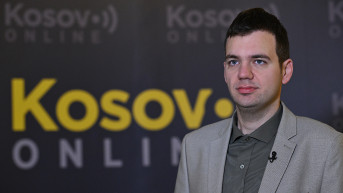
The rise of right-wing parties in European Union countries could impact the resolution of the Kosovo issue, especially considering that most of these parties maintain the stance that Kosovo is not an independent state, Nikola Perisic from the Center for Social Research says. However, he points out that, regardless of the trend of these parties gaining ground in EU state elections, the question remains about their coalition potential, i.e., whether they will be able to form a government or be part of the ruling coalition.
"The rise of the right could affect the resolution of the Kosovo issue in several ways. Firstly, we know that these parties have the stance that Kosovo is not an independent state. You even have an initiative from the Alternative for Germany, which offered the Bundestag a solution to withdraw recognition of Kosovo's independence. In other countries, we see the strengthening of the right; they performed very well in the elections in the Netherlands. However, the question remains whether these parties, despite their rise, will manage to be part of the ruling coalition. Often, their coalition potential is questionable," Perisic notes for Kosovo Online.
Besides the evident trend of strengthening right-wing movements in various European countries, there is an increasing likelihood of the far right uniting at the EU level. A few days ago, Matteo Salvini, the leader of the Italian party Lega and deputy prime minister in the right-wing government, gathered European right-wing leaders in Florence to coordinate their joint actions for the European Parliament elections in June next year.
Perisic points out that what could also impact the EU regarding the rise of the right is a resurgence of a sovereigntist approach.
"In other words, the EU itself may not act coherently, may lack unity, and experience internal crises. The EU has some crucial internal issues to address, and the question is how much it can engage in foreign policy. We see that the diplomatic capacity of the EU in these crisis moments, starting with COVID and through all the crises in recent years, is questionable. The way they handle it is not as straightforward as expected," he says.
When asked whether this increasingly evident shift in the political landscape in Europe is one of the reasons to hasten the resolution of the Kosovo issue and implement the Franco-German plan, Perisic points out that everything happening in recent years, including wars and security crises, does not suit the EU.
"The economic crisis can be felt, hence the political crisis, and this rise of the right is somewhat connected to all these problems. What is also clear is that the EU lacks the capacity to solve all of this, and that's why we increasingly see initiatives from the US in the negotiations between Belgrade and Pristina. In a way, it is expected because the US has brought long-term peace to the European region, and in fact, in all long-term peace agreements, they have mediated. They only did not mediate in the Minsk Agreements 1 and 2, and we see how that ended, with the conflict in Ukraine," Perisic emphasizes.
He also reminds that Italian Prime Minister Giorgia Meloni visited Belgrade a few days ago.
"Italy is one of the Quint countries' member states, and an increasingly active role of the Quint states in resolving and mediating in the Belgrade-Pristina dialogue is expected in the coming period," Perisic believes.



0 comments