
Petkovic: Kurti lacks a parliamentary majority, attacks on Serbs mask crisis in Pristina
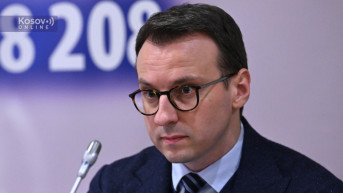
The Director of the Office for Kosovo and Metohija, Petar Petkovic, stated that Albin Kurti does not have a majority to form a government and that he is using attacks on Serbs to mask the political crisis in Pristina.
Commenting on the arrest of his assistant, Igor Popovic, Petkovic reiterated to TV Prva that there would be no dialogue until Popovic is released, stressing that anyone who thought Serbia would be humiliated by his arrest is gravely mistaken.
He recalled that Popovic was essentially abducted for words spoken at a commemoration for Serbian victims in Orahovac, and that a judicial process is underway at the Specialist Chambers in The Hague concerning that specific crime committed by the KLA.
"The truth cannot be banned, nor can it be stopped. We will never give up on the truth when it comes to the crimes against Serbs. War crimes do not expire, and we will not rest until those responsible for the suffering of Serbs in Kosovo and Metohija are brought to justice. Everyone knows who did what and who killed Serbs — the documents exist — but no one wants to deal with that," Petkovic emphasized.
He noted that he is in contact with Popovic’s legal team and family, and that he, along with President Aleksandar Vucic and Foreign Minister Marko Djuric, is doing everything possible to secure Popovic’s release. He added that no conversation with foreign officials begins without raising the issue of Popovic’s immediate release.
Petkovic said Kurti has "crossed all lines" with his behavior.
"He is doing everything to cover up the massive institutional crisis in Pristina. They have tried 54 times to constitute the parliament and failed — let alone form a government. Kurti doesn’t have a majority and is nervous. These attacks on Serbs in Kosovo, on Serbia, Vucic, and Serbian officials are attempts to cover up the real situation in Pristina," Petkovic said.
Commenting on the many verdicts against Serbs without evidence, he described this as a hallmark of Pristina's judiciary, which operates in service of Kurti and his anti-Serb agenda.
He also pointed out that ethnically motivated attacks have doubled since Kurti came to power, clearly reflecting the hostile environment in which Serbs live.
A significant part of these attacks, Petkovic said, is instigated by "Kurti's police, who carry out terror in the north," and noted that Kurti continues to open new police stations in the north.
Petkovic said the same is true regarding the construction of two new bridges on the Ibar River without the consent of the majority-Serb population.
"The idea is to inaugurate them at the peak of the local election campaign to show that he has managed to integrate the north into Pristina’s system. He is doing everything to provoke new violence and tensions," warned Petkovic, reminding that the main Ibar bridge is currently closed to prevent extremists from the south from heading north, as 200 such incidents occurred in 1999 alone.
Regarding the international community, Petkovic recalled that the Western partners are the same countries that recognized Kosovo’s independence and are doing everything to ensure its viability.
"They say Kurti is stubborn and refuses to listen, but whatever he does, they turn a blind eye — because so-called Kosovo is the child of the international community," he noted.
Nevertheless, Petkovic said that things have started to shift in the past ten years, thanks to the policies of Aleksandar Vucic, and that Serbia is finally being heard.
"We are fighting to preserve peace, security, and stability, but despite our constructive approach, the West's policy on Kosovo and Metohija is clear. We have no illusions, and we must view things from our own perspective — what we can do, how we can preserve peace," he said, emphasizing that dialogue is the only path to a solution.
He accused Pristina of abusing the dialogue process.
"They’re not interested in technical issues that would improve the everyday lives of Serbs. The only way to reach a solution is through dialogue — and that solution must include the formation of the Community of Serb-majority Municipalities (CSM)," he stressed.
He underlined that the responsibility for the CSM lies primarily with the European Union, which signed the 2013 agreement.
"We insist on the Brussels Agreement. President Vucic’s decision to sign it was a wise one. It gives us the right to insist on the CSM until it is established. The CSM is the framework that enables the survival of the Serbian people in Kosovo and Metohija," Petkovic added.
He emphasized that if anyone questions whether the Brussels Agreement is good or not, "they need only look at how vehemently Kurti attacks it."
"As soon as Kurti attacks something, it means it’s good. He doesn’t want to implement it — and the same goes for other parties," Petkovic said.
Regarding the recent eviction of the Janicijevic family in North Mitrovica, he said this is just one example of how Kurti’s administration is pressuring Serbs to leave.
"He is evicting them from apartments they legally bought. He uses a well-known scheme: with two false witnesses, they seize Serbian property in Kosovo, their fake courts confirm it, and then Kosovo police come to evict our people — in this case, a single mother with two children," Petkovic said.
He recalled President Vucic’s statement that "no one will be left without a roof over their head."
Petkovic added that they immediately contacted the family and did everything to provide shelter, while also seeking a long-term solution.
"Serbia will always stand by its people, even in the most difficult times," he said.
"Now that we have fake mayors, it is difficult to implement anything on the ground. The Kosovo police are trying to suppress everything Serbia is doing — they are expelling the dinar, closing institutions and sports centers, harassing our people. Already, 20% of Serbs have left Kosovo and Metohija," Petkovic pointed out.
He described the situation for Serbs in Kosovo as unbearable, but urged them to remain calm and composed, especially with local elections approaching in October.
"They have endured a lot. They just need to be patient a little longer — every oppression has its end," he said.
When it was noted that there are now virtually no Serbs left in Prizren, Petkovic recalled that 10,000 Serbs had to flee that area, and the situation is no better in other places.
"I live to help the Serbian people. Of course it hurts when your assistant is arrested without cause, when Serbs are arrested simply for protecting monasteries and icons. I know what sacred things I am defending and why I am fighting. When you fight with true dedication and responsibility, the results will come," he concluded.
Serbia, he said, must be wise and allow President Vucic to take necessary steps, hoping that times will change.
"The geopolitical landscape is shifting at lightning speed. That’s why it's vital to strengthen Serbia and all its capacities," Petkovic said.
He added that Serbia is constantly thinking of ways to support its people in Kosovo and motivate them to stay.
"All the measures we take are directed at those who live in Kosovo under impossible conditions. Pristina is trying to suffocate Serbian life there. In addition to salaries and pensions, we’ve also introduced new support measures for those without state income," he explained, announcing new aid starting this autumn for 5,000 of the most vulnerable families, who will receive 20,000 dinars per month.
Kamberi an Extension of Kurti’s Policy
Petkovic said that MP Shaip Kamberi’s request to include the issue of Albanians in Serbia in the Belgrade–Pristina dialogue was made under Kurti’s instructions.
"Kamberi is someone who tries daily to undermine Serbia’s constitutional order, even though he was elected as an MP. It’s paradoxical that he now seeks to improve Albanian rights. This is an abuse of minority rights and ignorance of the dialogue and the resolutions that define it," Petkovic stated.
He recalled that UN Security Council Resolution 1244, which defines the mandate of envoy Peter Sørensen, clearly determines the scope and subject of the dialogue.
"It’s well known what can and cannot be discussed. Issues relating to central Serbia are not part of the dialogue," he underlined.
He also noted that the term "Presevo Valley" does not officially exist and was invented by some Western diplomats and used by Albanians to create political and geographic distance from central Serbia.
"This term is used to promote the Greater Albania idea advocated by Albanian extremists," he added.
Petkovic stressed that Kamberi is simply carrying out Kurti and Bislimi’s agenda.
"What he is doing now is precisely what Bislimi tried to impose in the last round of dialogue — introducing a non-existent topic. I made it very clear to both Sørensen and Bislimi that the scope of the dialogue is known, that it cannot be misused, and that we should talk about the agreements reached, about the Serbs under constant terror, and about ways to improve their situation," Petkovic explained.
He concluded that "what Bislimi fails to push through in dialogue, he assigns to Kamberi to attempt by other means."
0 comments