
Petkovic: Serbs in Kosovo demonstrated unity, Kurti secured a seat for Rasic with Albanian votes
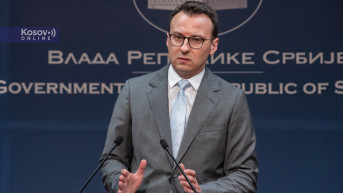
The Director of the Office for Kosovo and Metohija, Petar Petkovic, stated that the Serb List achieved a convincing victory in the parliamentary elections in Kosovo, winning all ten mandates in Serbian-majority areas, while Self-Determination leader Albin Kurti enabled Nenad Rasic to enter parliament through Albanian votes, arguing that such a method of election cannot represent the will of the Serbian people.
Petkovic said that support for the Serb List is growing in all Serbian areas of Kosovo and assessed that preserving Serbian unity was the key response to what he described as pressure, provocations, and attempts by Pristina to weaken the political representatives of the Serbs.
“Kurti used Albanian votes to secure Rasic's entry into the Pristina parliament, and also to secure for him the seat guaranteed for a representative of the Serbian community. We have ten guaranteed seats in that so-called Pristina parliament for representatives of the Serbian people. That means Serbs should vote for those representatives so that the voice of the Serbian people can be heard in parliament. This is a protective mechanism established under the Ahtisaari Plan. It was later incorporated into their so-called constitution and became part of their regulations. The mandate of that Serbian representative in the Pristina parliament is worth its weight in gold. Why? First, without the consent of those representatives of the Serbian people holding the ten guaranteed seats, a government cannot be formed in Pristina. Second, laws and important decisions of vital significance cannot be adopted, such as the formation of the so-called Kosovo army or many other laws. That army could not be formed because the Serb List had not voted for it,” Petkovic said.
As he stressed, Kurti needs to show the international community that he has a multiethnic government, that he cooperates with Serbs, and that he has a Serbian representative who was supposedly elected by Serbs but supports Kurti's policies.
“The Serb List won all ten mandates because, in places where Serbs live, in northern Kosovo and Metohija, central Kosovo, Pomoravlje, Sirinicka Zupa, and Metohija, almost all Serbs voted for the Serb List, more than 95 percent. This shows that the Serb List truly is the genuine representative of the Serbian people and the only legitimate representative when we speak of a Serbian political party. Rasic's party has only Nenad Rasic's Serbian name and surname and nothing more. His political program, his goals, his cooperation with Kurti, everything he does, has nothing to do with official Belgrade or the Serbian people. It has nothing to do with Serbian national interests. He has rallied under the banner of Kurti's Greater Albanian policy,” Petkovic said.
He also recalled the arrests of directors of educational and healthcare institutions operating within the Serbian system, claiming that Nenad Rasic contributed to those actions.
“Thanks to Rasic, the Kosovo Police entered Serbian schools and hospitals for the first time. Thanks to Rasic, Serbian directors of educational and healthcare institutions in central Kosovo were arrested. Thanks to Rasic, the Kosovo Police came to northern Kosovo and Metohija, among other things because he voted for it. You may recall that he voted in favor of establishing a museum of the so-called genocide, an alleged genocide committed by Serbia in Kosovo. He is literally at the forefront of this anti-Serb policy, even more than Kurti. History teaches us that converts were often worse than the Turks. The only Serbian party is the Serb List, while Rasic's party is not a Serbian party at all but Kurti's list and an Albanian party,” he said.
Asked whether Kurti has any contacts with Belgrade, Petkovic said he does not and that such contacts are not needed because, according to him, Kurti's only policy is to expel Serbs from Kosovo.
“He has no contacts with us, nor do we need them. A man whose policy is to drive the Serbian people out of Kosovo and Metohija is simply someone with whom nobody can cooperate. There is no cooperation with them even in the dialogue, not because we do not want to talk and move toward a compromise solution, but because he rejects everything. He, Besnik Bislimi, and everyone in Self-Determination,” Petkovic said.
Petkovic also commented on Kosovo's new negotiator in Brussels, Kosovo's ambassador to Belgium, whom he has not yet met.
“I have not had the opportunity to meet him because when Sorensen wanted to convene meetings over the past month, they refused because they did not want to participate in the dialogue during their election campaign. As far as the Brussels talks and Sorensen himself are concerned, there is a clearly established agenda. We know what we are negotiating and how we are talking because the agenda must be clearly agreed upon. Whenever we are in Brussels, we insist first and foremost on the formation of the Community of Serb Municipalities. We will never abandon that issue,” he said.
He added that Kurti will never establish the Community of Serb Municipalities, even though the Brussels Agreement was ratified in the Pristina parliament by a two-thirds majority in 2013.
“If you want to know what is good for the Serbian people, just look at what Kurti does, what he rejects, and what he accepts. When Kurti accepts Rasic, you know it is against the interests of the Serbian people. When Kurti supports the protesters here in central Serbia, it is clear they are acting against the interests of the Serbian people and the Serbian state. When Kurti refuses to establish the Community of Serb Municipalities, you know that it is in the interest of the Serbian people,” he said.
Petkovic also commented on the Serb List's result, noting that it achieved a convincing victory in all Serbian-majority areas in Kosovo.
“On Sunday, the Serb List won more than 43,800 votes. That is 1,000 more than in the December elections. Support for the Serb List has only grown and continues to grow in Serbian areas. Ultimately, such strong support is due, among other things, to the fact that President Aleksandar Vucic and the Serbian state stand behind the Serb List. The Serb List is the guarantor of preserving Serbian national interests and of all the assistance provided by the Serbian state to the Serbian people in Kosovo and Metohija,” he said.
While support for the Serb List was growing, support for Rasic was steadily declining.
“In the latest elections, Rasic won around 145 votes in his hometown of Dobrotin, while the Serb List received more than 550 votes. Since he did not pass the threshold in Serbian areas, which is the threshold relevant for entering parliament through seats guaranteed for Serbs, Kurti resorted to what he had done before. He secured Albanian votes for Rasic. In this way he provided him with an additional 2,200 votes. Since February last year, Kurti gave Rasic 1,100 votes, then 1,700 in December, and now 2,200. They monitor how support for Rasic declines in Serbian areas, so they increase the number of Albanian votes he receives. How can one Albanian, let alone 2,200 of them, vote for Rasic so that he can represent Serbian interests in parliament? Of course, that makes no sense at all,” Petkovic said.
According to him, Pristina was very actively involved in what he described as an attempted color revolution in Serbia.
“They participated in many ways, through money, political influence, and certain structures and groups of people. Kurti did not hide it. The color revolution failed. Elections take place at the ballot box, not in the streets, and decent Serbia, the majority Serbia, stands with President Aleksandar Vucic. As long as he is president, Belgrade will never recognize the so-called independence of Kosovo,” he said.
He also commented on the congratulations sent by European officials to Kurti while votes were still being counted.
“What is concerning are the congratulations that quickly arrived from Brussels for Kurti. The vote-counting process is still ongoing, and before it is even known how many votes each party has received, Marta Kos comes out with congratulations to Albin Kurti and says this is an exemplary democracy. Yet there is nothing democratic about it, considering that during the campaign Kurti did everything to intimidate the Serbian people and even removed Serbian flags from elementary schools that served as polling stations. It is clear to everyone that we can rely only on ourselves. Whatever Kurti does, people will look the other way because so-called Kosovo is a creation of the West. That will not change. They will say he does not listen and that he is stubborn, but in principle they support his policies. That is why it is important for us to focus on ourselves and preserve unity and solidarity among our people in Kosovo and Metohija. Kurti tried to split the Serb List and Serbian unity, but he failed. We responded to all that terror, provocation, intimidation, and arrests with unity and with the victory of the Serb List,” Petkovic said.
Petkovic added that financial assistance packages for Serbs in Kosovo would continue through salaries, pensions, and social benefits.
“For 10,000 Serbs there will be permanent social assistance of 20,000 dinars, a meal allowance for all children, and infrastructure projects. The budget of the Office for Kosovo and Metohija is the largest in its history, which clearly shows that when we talk about Kosovo, these are not just empty words but concrete actions. What is especially important is that we firmly adhere to the principles strongly advocated by President Vucic,” he said.
He also recalled that today marks the anniversary of the adoption of UN Security Council Resolution 1244, which, as he stated, confirmed the sovereignty and territorial integrity of the then Federal Republic of Yugoslavia and its successor state, Serbia, including Kosovo and Metohija.
“That is our title deed, that is what we must insist upon. We must adhere to international law and to the principles and norms of the United Nations Charter. We are a small country in terms of territory, but we must firmly uphold those principles because, regardless of the state of the world, we must stay our course. Ultimately, everyone will have to return to the framework of international law because that is the only way the world can endure,” Petkovic concluded.
0 comments