
Petkovic: Support for the Serb List continues to grow, but what is happening in Pristina is outright electoral theft
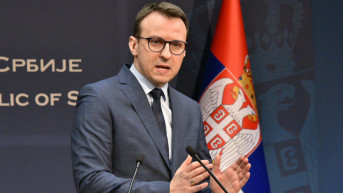
The Director of the Office for Kosovo and Metohija, Petar Petkovic, stated today that the Serb List, despite what he described as impossible conditions, reaffirmed its dominance in Serbian-majority areas in the Kosovo elections, winning more than 43,800 votes and effectively securing all 10 guaranteed seats reserved for the Serbian community. However, he argued that what is taking place is not merely political engineering but outright electoral theft aimed at enabling Albin Kurti to secure a parliamentary seat for Nenad Rasic through Albanian votes, given that Rasic lacks sufficient support among the Serbian population.
Petkovic stressed that a single Serbian parliamentary seat is “worth its weight in gold” to Kurti because, without Serbian representatives, it is impossible to form a government or adopt legislation concerning matters of vital interest.
According to Petkovic, Rasic serves Kurti primarily as a symbol of a purportedly multiethnic government and nothing more.
He once again congratulated the Serb List and the Serbian people on what he described as a convincing victory across all Serbian communities, asserting that the Serb List—and no other political actor—is the sole legitimate representative of Kosovo Serbs.
Petkovic noted that a comparison of election cycles from February and December of last year through to the present clearly demonstrates that support for the Serb List has been steadily increasing despite extremely difficult circumstances.
“From February to June, the Serb List gained an additional 4,000 votes, and compared to December, it won 1,000 more votes. This clearly demonstrates that despite all the pressure, attacks, and Albin Kurti’s attempts to eliminate the Serb List, despite the intimidation of our people, the arrests of Serbian school and hospital directors, arrests carried out on election day in Gorazdevac, attempts to remove Serbian flags from schools serving as polling stations, the reduced number of Serbian members on polling boards, and the fact that not a single Serb served as chair of a municipal election commission in the north, the Serb List nevertheless secured and reaffirmed its dominance on the political scene in Kosovo and Metohija’s Serbian communities. The Serbian people demonstrated unity and cohesion, listened to President Aleksandar Vucic, and voted for the Serb List, which remains the guarantor of Serbian interests in Kosovo and Metohija,” Petkovic said in an interview with TV K1.
He emphasized that, despite the difficult environment in which elections are conducted, unity among Serbs continues to grow. He noted that Serbs remain aligned with the Republic of Serbia and President Aleksandar Vucic, receiving salaries, pensions, and social benefits from Serbia, while Serbian institutions in the fields of education, healthcare, and higher education continue to function and represent key pillars of the community’s survival in Kosovo.
Petkovic warned that all of this remains at risk because, in his view, Albin Kurti and the authorities in Pristina are seeking to push Serbs out of Kosovo, intimidate the population, dismantle the Serb List, and promote individuals who do not support Serbian national interests and who align themselves with Kurti and his policies.
“In this regard, I am referring to Nenad Rasic, a man who is Serbian only by name and surname and nothing more, who has sacrificed principles for personal gain and, for narrow personal interests, aligned himself with Kurti and become equally complicit in the persecution of the Serbian people,” Petkovic said.
He pointed out that while support for the Serb List is increasing in Serbian-majority areas, support for Rasic is declining.
“Compared to February, the Serb List has received approximately fourteen times more votes than Rasic,” Petkovic stated.
He explained that Rasic heads a ministry within the Government of Kosovo and that Kurti has allegedly placed all the ministry’s budgetary resources at his disposal, enabling him to use public funds to win Serbian votes.
“Rasic received just over 2,000 Serbian votes and would never have crossed the electoral threshold if only votes cast in Serbian communities were taken into account. Therefore, what is happening is not political engineering—it is theft,” Petkovic asserted.
He explained that of the 120 seats in the Kosovo Assembly, 100 are allocated to Albanian parties, while 10 are reserved for Serbian representatives and 10 for representatives of other minority communities. According to Petkovic, only Serbian voters should determine the allocation of the 10 reserved Serbian seats, as this mechanism was established under the Ahtisaari Plan and Kosovo’s Constitution to ensure Serbian representation in parliament.
“Those seats are intended to be occupied by Serbs elected by Serbs. That is why we say the Serb List won all 10 mandates, because Serbs overwhelmingly voted for the Serb List, not for Rasic. In order to secure one Serbian mandate for Rasic, because he lacks sufficient support in Serbian communities, Kurti resorted to actions that are unlawful and that undermine the very mechanism intended to protect minority representation. He provided Rasic with Albanian votes from a reservoir of Albanian ballots, effectively gifting them to him because it was the easiest way to take away a Serbian mandate. Kurti gave Rasic 2,200 Albanian votes,” Petkovic said.
He added that data published by the Central Election Commission show that Rasic received votes in municipalities such as Djakovica, Kacanik, and Glogovac, where, according to Petkovic, there are virtually no Serbian residents.
“There is a visible trend of increasing Albanian support for Nenad Rasic—from 1,100 votes in February last year, to 1,750 in December, and now 2,200 votes. They monitored turnout in Serbian communities, and when it became clear that Rasic did not have enough Serbian votes, they turned to a reserve pool of Albanian votes. This is outright theft and usurpation,” Petkovic stressed.
He said that these concerns had been communicated to the international community and that he had sent a letter containing detailed data and explanations. However, he added that international actors were already aware of the situation and appeared unconcerned.
“Neither Marta Kos nor others in Brussels seem troubled by this. They immediately congratulated Kurti on his victory, which is highly unusual, not to say inappropriate, given that vote counting is still ongoing,” Petkovic said.
He noted that conditional ballots, including those cast by internally displaced persons, are still being counted and expressed confidence that support for the Serb List would increase further.
“Vote counting is still underway, yet the Commissioner publicly congratulates Kurti and claims the elections were conducted in a democratic atmosphere, while what we are witnessing is outright theft,” Petkovic stated.
Regarding overall turnout, Petkovic said that approximately 230,000 fewer votes had been cast compared to the December elections, while Kurti had received around 180,000 fewer votes than in December, excluding postal ballots from the diaspora that are yet to be counted.
He recalled that overall turnout stood at around 36 percent but was significantly higher in Serbian municipalities.
Asked why this was the case, Petkovic replied that Serbs in Kosovo do not have the luxury of division or error.
“For them, this is a struggle for survival. Serbs in Kosovo and Metohija are fighting for a better future. That is why we continue to support our people. We have provided permanent monthly assistance of 10,000 dinars to the most vulnerable, we support housing construction and infrastructure projects, and we are doing everything possible to help our people remain and endure despite Albin Kurti’s campaign of pressure,” he said.
Petkovic reiterated that a single Serbian mandate is “worth its weight in gold” to Kurti because, without Serbian representatives in the Kosovo Assembly, a government cannot be formed and legislation of vital interest cannot be adopted.
“He needs the mechanism of a double majority—not only the support of Albanian deputies but also Serbian deputies. That is why Kurti targets Serbian mandates. He sought to secure more than one. Rasic serves merely as evidence that the government is supposedly multiethnic, nothing more. Rasic differs little from Kurti. He supported the militarization of the north, brought heavily armed police units into Serbian institutions, contributed to the arrests of Serbian officials, and voted in favor of establishing a museum dedicated to an alleged genocide committed by Serbia in Kosovo and Metohija. Rasic does more than many Albanians themselves,” Petkovic claimed.
Asked about the current state of the Belgrade–Pristina dialogue, Petkovic reiterated that Belgrade remains committed to dialogue and compromise, but argued that such an approach is rejected in Pristina.
“I travelled to Brussels even during election periods in Serbia because dialogue and the search for solutions are essential. Without dialogue and a negotiating table in Brussels, incidents occur on the ground, and it is the Serbs in Kosovo and Metohija who pay the price. But how can we negotiate when the person sitting across the table does not want dialogue?” Petkovic asked.
He further stressed that the establishment of the Association of Serb-majority Municipalities (ASM) remains the most important issue for Belgrade, describing it as a framework for the survival of the Serbian community and the protection of both collective and individual rights. He recalled that the Kosovo Assembly had adopted the 2013 Brussels Agreement, making the establishment of the ASM an internal obligation of Pristina.
“We will not move even one iota away from the ASM, and we tell our partners in the EU exactly that—you signed this agreement, and agreements must be respected. We do not look toward Pristina for solutions; if Kurti had his way, there would be no Serbs left in Kosovo and Metohija. Brussels bears responsibility for ensuring implementation of what was agreed, and we will not abandon that position,” Petkovic stated.
Asked whether the Serb List could cooperate with opposition parties in Pristina, Petkovic replied that this was a matter for the Serb List itself.
“They decide their own political course. Our role is to support them, while the decisions are theirs. There is complete trust between Belgrade and the Serb List. What concerns us now is the mandate that has been taken from us. We won ten mandates, and there should be ten Serbian deputies in parliament, not Rasic, who secured a seat through Albanian votes. If this trend continues, what will it mean in a few years’ time—that Albanians from Podujevo and Kacanik will be choosing Serbian representatives?” Petkovic warned.
He concluded by pointing to what he described as a deep political crisis in Pristina that has persisted since February of last year.
“The crisis is profound because the divisions among Albanian political parties are so deep that they cannot agree on a government or a president. These elections were held because they failed to agree on a president. Now they must constitute the parliament, form a government, and elect a president. I am not certain they will succeed. If they fail to elect a president, new elections will follow. This is becoming not only a political crisis but a constitutional one. I am not saying new elections are inevitable; I am merely outlining the possibilities. As for what will happen, only God knows, because in Kosovo and Metohija there is neither justice nor the rule of law. Our task is to strengthen our position, maintain contact with our people, and support the Serbian community as much as possible. The Serb List achieved victory under impossible conditions. More and more Serbs understand who Nenad Rasic is and that he brings nothing beneficial to the Serbian people,” Petkovic concluded.

0 comments