
Petkovic: We insisted on the CSM – it is the framework for the survival of the Serbian people, but Bislimi is not interested
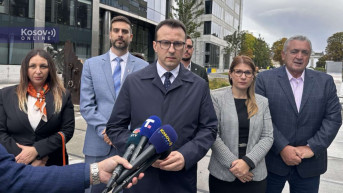
The Director of the Office for Kosovo and Metohija, Petar Petkovic, stated today in Brussels, after a new round of dialogue, that he once again insisted at all meetings—both bilateral and trilateral—on the urgent establishment of the Community of Serb Municipalities (CSM), stressing that this represents the framework for the survival of the Serbian people in Kosovo, a prerequisite for any further talks, and something that has been awaited for a full 12 years.
Petkovic noted that this did not please Pristina’s negotiator, Besnik Bislimi, who, as he reported, once again today did not wish to answer the question of whether he accepts the European draft statute for the establishment of the CSM.
“What we said at all the meetings and what we insisted on is that the Community of Serb Municipalities must be established immediately and urgently, as it is the prerequisite for us to be able to continue further. Without the CSM, the very survival of the Serbian people in Kosovo and Metohija is at stake. For us, this has already become a humanitarian issue, because the Serbian people can no longer endure the terror inflicted by Kurti’s police and Kurti’s regime. I openly told this to Besnik Bislimi,” Petkovic told reporters after the talks that lasted more than seven hours.
He said that the issue of the missing was also discussed, clearly stating that Belgrade is absolutely committed to resolving this matter in the interest, above all, of the families who have been waiting for more than 20 years to learn the truth about the fate of their loved ones.
“We raised all questions related to this issue: how to form a joint commission, how it should work, how to establish working rules, everything necessary. Regardless of what needs to happen in Brussels, regardless of the joint agreement we insist on, we are working unilaterally, making efforts to find the missing. Yesterday’s excavation in central Serbia is proof of this,” Petkovic said.
He stressed that Belgrade is doing everything to preserve peace and stability in Kosovo.
He also said he spoke about the suffering of Serbs, noting that around 700 ethnically motivated attacks on Serbs, the Serbian Orthodox Church, churches, and cemeteries have been recorded, along with harassment of children and women, and even the renaming of streets—all aimed at expelling the Serbian people from Kosovo.
“The Community of Serb Municipalities represents the framework for the survival of the Serbian people, and we will insist on it. We said that the CSM is the prerequisite for any further talks, any further steps. We have been waiting for it for 12 years,” Petkovic underlined.
He added that Bislimi did not like this, just as he did not like the fact that talks were taking place in Brussels only three days before the start of the election campaign, because, according to Petkovic, “when elections come, Albin Kurti and Bislimi run from dialogue as the devil runs from the cross.”
Petkovic pointed out that even today, when Pristina should have refrained from unilateral actions, it acted to undermine the dialogue by unlawfully closing down premises in Gracanica and Strpce belonging to the Republic of Serbia, i.e. Serbia’s Post Office. This, he said, speaks volumes about their attitude toward dialogue.
He stated that they also discussed all the arrested Serbs “who languish in Kurti’s dungeons” merely for bearing Serbian names and surnames or wearing T-shirts with Serbian emblems that offend no one.
“Of course, Bislimi keeps to his own narrative, because he is not interested in anything when it comes to dialogue,” Petkovic stressed.
He reported that the direct encounter was far from pleasant, as Bislimi refused to respond to Belgrade’s demand to discuss de-escalation—something essential and also requested by the EU itself since June 3, 2023.
“I was prepared to present Belgrade’s plan for de-escalation, but Bislimi refused to talk about it or even to listen. Instead, he said that we should first deal with the situation in Belgrade, and he most openly supported the blockaders who for months have been attacking President Vucic and our state policy. By doing so, he made it clear that he supports those who wish to overthrow the President and Government of Serbia in the streets—likely to bring to power those who would immediately recognize the so-called independent Kosovo, since they will never get that recognition from Aleksandar Vucic and this team dealing with Kosovo and Metohija. That is what concerns him—not the suffering of the Serbian people in Kosovo, nor how Serbs south of the Ibar live,” Petkovic said.
He added that he also raised the issue of separated families, as Kurti is expelling people who work in central Serbia but live in Kosovo.
“I discussed all these major, crucial topics, also with Sorensen, and tried to raise them with Bislimi. At one point, as before, he attempted provocations to make us withdraw, but we calmly endured everything. In the trilateral meeting, I insisted on the CSM. That was the first thing I demanded: to begin concrete talks on the statute. Bislimi will stick to his story, but that was the main topic—and Sorensen and his team can confirm this,” Petkovic emphasized.
He also stressed that he repeatedly asked Bislimi, even in front of Sorensen, whether he accepts the European draft statute for the CSM, and even asked Sorensen to put the same question to him—but there was no answer.
“We are going in circles. He will not answer because he is not interested in the CSM. Everyone should know this. President Vucic has long warned that Albin Kurti wants to expel the Serbian people. We will safeguard peace and do our utmost to protect our people, though it is not easy,” said the head of the Office for Kosovo and Metohija.
He also referred to the many obstructions in the electoral process faced by the Serbian List.
“We must preserve unity, fight with cool heads for our people, for what we agreed upon, what we signed. That is the only way to move forward and secure our position. Because Kurti and Bislimi would prefer there were no Serbs. Bislimi came to Brussels, but you don’t even know with whom you are talking, as they have neither a government nor a parliament. Their so-called Constitutional Court has halted all political activity, and they are going in circles. Bislimi used this opportunity merely to claim he is participating in dialogue, but there was no substantive discussion,” Petkovic said, adding that Belgrade will always respond to Peter Sorensen’s calls, as dialogue is the only place where problems can be resolved.
“We seek a compromise solution, but the problem lies with the other side, which is not ready for any talks or agreements,” Petkovic concluded.
He further pointed out that concrete discussions are now underway about establishing a Joint Commission on the Missing.
“This commission is meant to support the Working Group led by Veljko Odalovic. The Working Group has been the key body handling this issue for 20 years. It must be clear under what rules the Working Group operates. All this needs to be agreed upon. It must be transparent, yet Pristina is obstructing it in its own way,” Petkovic explained.
He emphasized that the Serbian delegation was also there to define the next steps for the normalization process.
“We said that we urgently need to start talking about the Statute. Without the Statute, how can we talk meaninglessly about the Community of Serb Municipalities? The Statute should reflect what was agreed in the General Principles of 2015, which clearly define the competences and everything the CSM should have—all its institutions,” Petkovic reported.
He added that de-escalation was also discussed and that he pointed out the unlawful actions of the Kosovo police, their shutting down of Serbian institutions, and persecution of the Serbian people.
“It is up to the EU to exert additional pressure on Pristina to stop all this. One cannot pretend everything is fine, talking about normalization in a philosophical manner, while no one actually stops Pristina’s harassment of Serbs on the ground. This must stop. It is impossible for the Serbian people to continue being victims of Kurti’s abuses,” he stressed.
Petkovic said that Pristina is using the dialogue merely to claim that everyone, including him, supports blockaders in Belgrade.
“When I said they had occupied the north, Bislimi responded that it is an integral part of Kosovo. I told him this is not true—we have the Constitution of Serbia and UN Security Council Resolution 1244, which clearly define this issue. I reminded him that the Brussels Agreement of 2013 stipulates that only the Kosovo Police may be present in the north, with its composition reflecting the ethnic structure—that is, 98 percent Serbs, not Albanians as is now the case,” the Director of the Office for Kosovo and Metohija pointed out.
He also conveyed that he told Bislimi that armed Albanians have no place in the north.
“Bislimi replied that this is not written in the Brussels Agreement, so I handed him the document, as he did not even know which point it was, and reminded him that it had been ratified by the Pristina Assembly,” he added, noting that this illustrates what the Serbian delegation faces in the dialogue.
“We will preserve peace and stability and use the mechanism of dialogue to secure agreements. We will not yield a single inch on our agreements—above all the one from 2013. I may be repetitive, but I will continue to insist: either we will have the CSM, or we cannot move forward,” Petkovic declared.
He also reported that Bislimi once again attempted in direct talks to raise the issue of Bujanovac and Presevo.
“He tried this last time too. Again, I was resolute and said we cannot continue direct talks if he insists on this topic, because it is an abuse of the dialogue,” Petkovic stressed.
He reminded that this issue has nothing to do with the Kosovo dialogue, noting that Bujanovac and Presevo are in central Serbia, and told Bislimi that he cannot use this topic for his “Greater Albanian aspirations and ideas of dialogue.”
“I will never allow that, even at the cost of getting up and leaving the meeting. What is important is that Sorensen cut Bislimi off, saying he cannot speak about it because it is not part of the dialogue. Everyone needs to know that. He refuses to talk about the suffering of the Serbian people and his own obligations,” Petkovic emphasized.
He said that the talks were about implementing existing agreements, while Pristina is running away from them and trying to introduce irrelevant topics.
“This shows they are not interested in the dialogue. In that situation, Sorensen does what he can,” Petkovic added, stressing that Sorensen is trying to extract some result from the dialogue and to assess Pristina’s behavior.


0 comments